Table of Contents
As a teacher, it always felt like there was more to do than there were hours in the day.
Planning, grading, meetings – and then the unspoken expectation to be available at all times.
I often found myself sacrificing my evenings, weekends, and personal time for the job – thinking that’s what I had to do to be a good teacher.
But here’s the truth: teacher boundaries are hard, especially in a profession where you care so deeply about your students.
I wish I had known how important boundaries were, not just for my own well-being, but for the sustainability of my career.
Looking back, I now understand that clear teacher boundaries could have made the difference between burnout and balance.
Why Teacher Boundaries Are So Hard to Set
Teacher boundaries are hard to set because we care.
We want to give our students the best, we want to help our colleagues, and we want to make sure everything is done perfectly.
That desire to give our all often leads us to overextend ourselves without even realizing it.
It’s also easy to fall into the trap of thinking that if we don’t say yes, we’re not being team players – or that if we don’t respond immediately to emails or messages, we’re not being as dedicated as we should be.
Over time, this constant pressure to be “on” can lead to burnout.
What I wish I had understood back then is that creating and honoring teacher boundaries doesn’t make you less of a teacher – it makes you a healthier, more effective one.
By setting limits, I could’ve avoided the burnout that eventually led me to leave the classroom.
How Teacher Boundaries Could Have Helped Me
Teacher boundaries could have helped me in so many ways – especially when it came to managing my time and energy.
Had I learned to say no, or at least slow down, I would have been able to balance work and life more effectively.
Personal Time Is Essential
I would’ve spent more time with my family and had more time to recharge.
Establishing strong teacher boundaries between school hours and personal time would have allowed me to actually leave work at work, instead of taking it home every night.
It’s easier to focus on your students when you’re rested and not burnt out.
Quality Over Quantity
If I had set boundaries around how much I took on, I could’ve focused on the most impactful tasks instead of spreading myself too thin.
Fewer, more intentional tasks would have allowed me to be more present and effective in the classroom.
Mental Health Matters
Clear teacher boundaries could have protected my mental health.
Instead of constantly worrying about tasks I hadn’t finished or what I was falling behind on, I would’ve been able to step away from school and be fully present for myself and my family.
Need a few time-saving tips to help you protect your evenings? Here are 3 quick math closure ideas you can incorporate after any lesson.

Practical Ways to Set Teacher Boundaries Without Guilt
If you’re feeling overwhelmed and like there’s always something more to do, here are a few practical steps you can take to set boundaries that protect your time and well-being:
Set Clear Work Hours
Set a clear start and end time for your workday.
It’s easy to get caught up in “just one more thing,” but by setting boundaries around your work hours, you can keep school tasks from taking over your evenings.
Let your colleagues and administrators know your boundaries so they can respect your time.
Prioritize Tasks
You can’t do everything – and that’s okay.
Prioritize what really needs to get done and leave the rest for later.
Don’t be afraid to let go of tasks that aren’t serving you or your students.
Part of honoring teacher boundaries is recognizing that not every task is urgent or essential.
Say No When Necessary
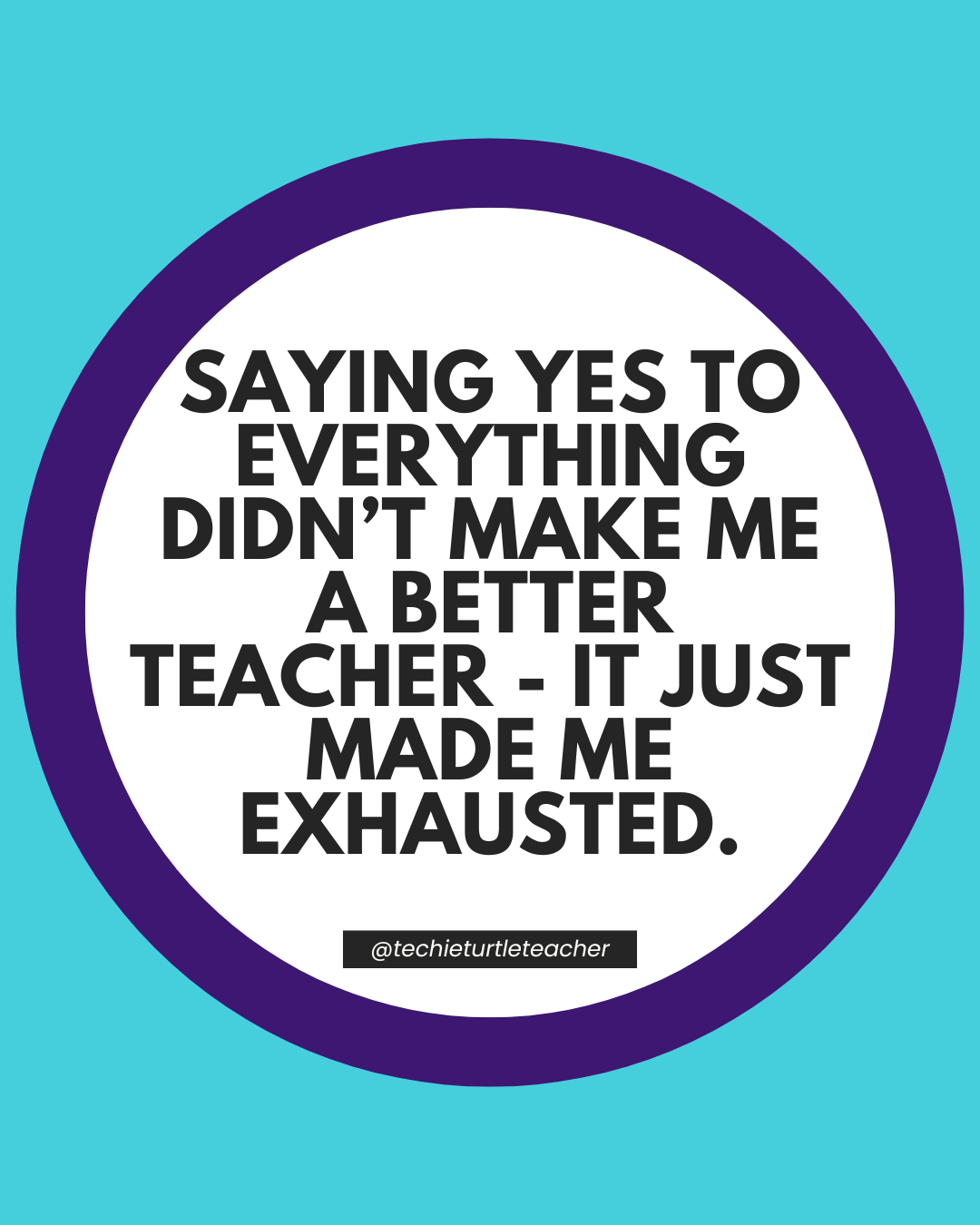
As teachers, we often want to say yes to everything, but learning to say no is a vital part of maintaining your energy.
If something doesn’t align with your priorities or will overwhelm you, it’s okay to say no.
Teacher boundaries give you permission to protect your time and sanity.
Schedule “You Time”
Make self-care a non-negotiable.
Schedule time for things that help you recharge – whether it’s reading a book, going for a walk, or spending time with family.
Treat this time as sacred, just like any other meeting or obligation.
Create a Support System
Find colleagues or friends who understand what you’re going through and can help you stay accountable to your boundaries.
Having a support system to share ideas, vent frustrations, or even just to keep you grounded can make all the difference.

A Final Word on Teacher Boundaries
Teacher boundaries are something I wish I had taken more seriously when I was teaching.
It’s easy to get caught up in the hustle and feel like you’re failing if you’re not always available or giving your all.
But the truth is, setting boundaries isn’t just about limiting your time – it’s about protecting your energy and well-being.
You don’t have to do it all.
In fact, you shouldn’t do it all.
By setting healthy teacher boundaries, you’ll be able to show up for your students in a way that’s sustainable, effective, and balanced.
It’s time to put yourself on the same level as your students and colleagues.
If you’re struggling with boundaries, remember: it’s never too late to start.
You deserve the time and space to recharge, so you can show up as your best self – both in and out of the classroom.
Pin this to Pinterest for later