By February, the reminders start stacking up.
“Eyes on me.”
“Let’s try that again.”
“Remember what we do during independent work.”
This is usually the point when teachers start searching for simple math activities that might help reset the tone in February. Something engaging. Something different. Something that brings back momentum.
Because students who could begin an assignment in October without hesitation now sit a little longer before starting. A few more hands go up for reassurance. Transitions that once took thirty seconds stretch into two or three minutes.
Nothing major has happened. The standards are the same. The lessons are similar. And yet the room carries a different pace than it did in the fall.
Planning follows that same shift. The math block that once felt automatic now requires more intention. Even choosing practice problems feels like one more decision layered onto an already full day.
Then Valentine’s week arrives. Excitement rises. Schedules shift. Attention stretches thin.
Table of Contents
When Adding More Activities Isn’t the Answer
When energy dips, the natural instinct is to add something new. A new center rotation. A themed activity. A different structure that promises to hold everyone’s attention.
But February often responds better to steadiness than novelty.
Instead of rebuilding the math block, this can be the time to simplify it. Not by lowering expectations, but by reducing unnecessary decisions and tightening what already works.
Low-prep or simple math activities become especially valuable during this stretch. The kind that do not require a long explanation, elaborate setup, or brand-new procedures. Students already understand the format. The expectations are familiar. Only the content shifts.
That consistency can calm a room faster than something flashy ever will.
Independent Work That Stays Predictable
Independent math work tends to feel different in February. A few more students need reassurance before beginning. A few more get stuck without trying the first step. The same assignment that felt manageable in the fall now requires closer monitoring.
This is when those simple math activities come in handy for you. Nothing that takes a lot of work or stress on your part.
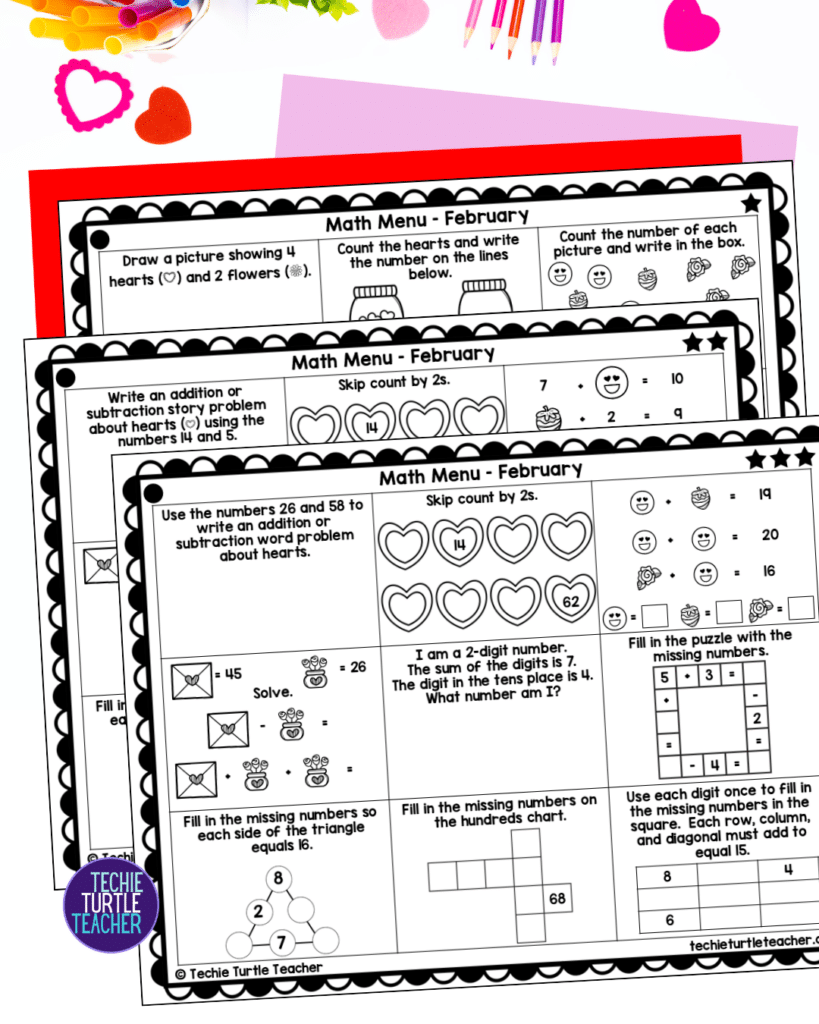
Structured math choice boards can help steady that time of day. The format remains the same each week, which reduces confusion and preserves energy. Instead of re-explaining directions, you rotate in skills like 2-digit addition practice, subtraction review, or math fact fluency.
Students know what to expect.
You know what to expect.
That predictability matters.
Small quick-practice pages can serve a similar role. A focused regrouping check. A short review of subtraction strategies. Something students can complete independently while you pull a small group for intervention. These pages are intentionally simple. They reinforce skills students already know, which builds confidence instead of frustration.
In February, reinforcement often works better than expansion.
Depth Over Volume
Another shift that can make a difference this time of year is focusing on depth instead of volume.
It is tempting to assign longer problem sets when attention feels scattered. More practice can seem like the safest choice. But sometimes one carefully chosen problem explored thoroughly creates stronger understanding than twenty rushed ones.
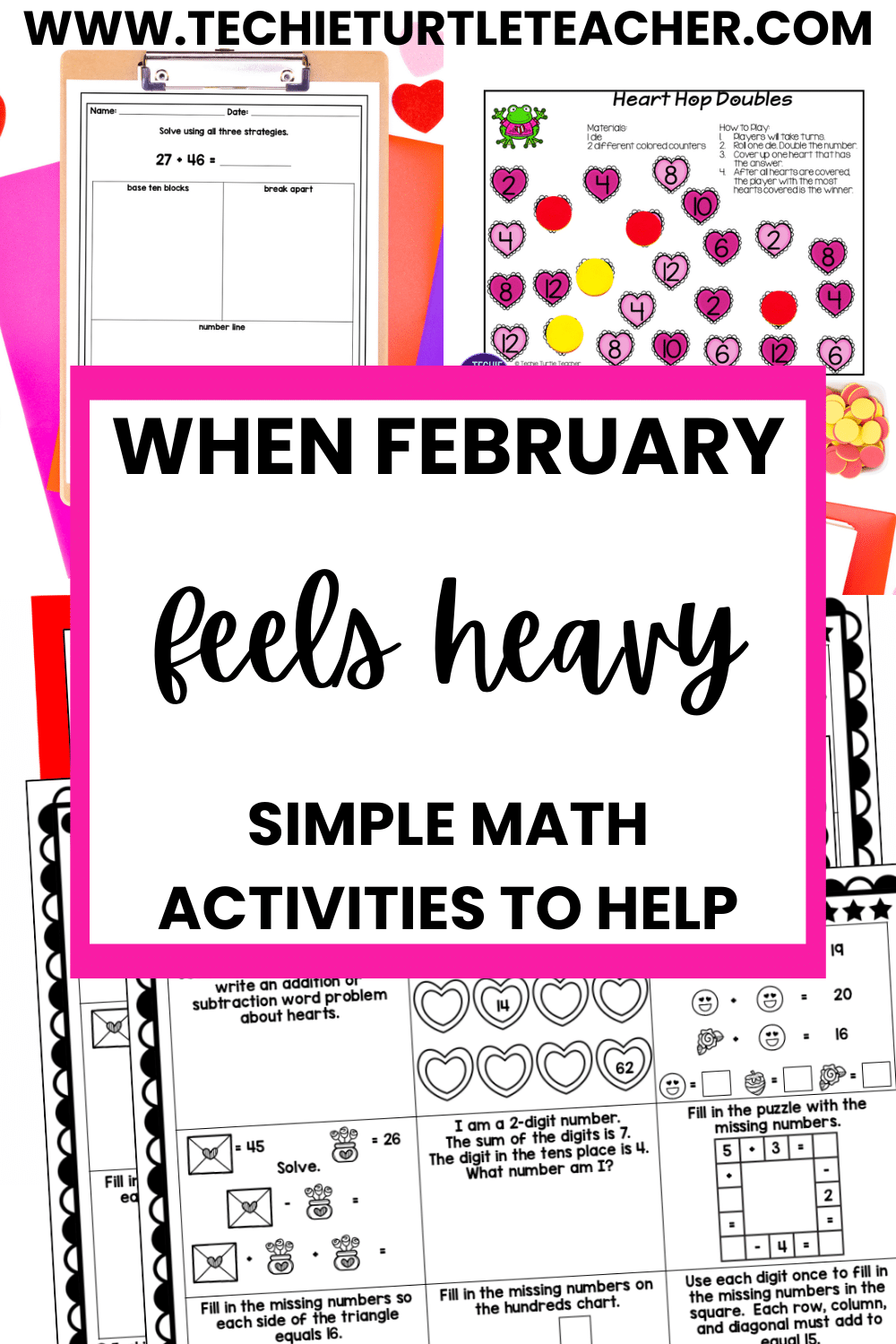
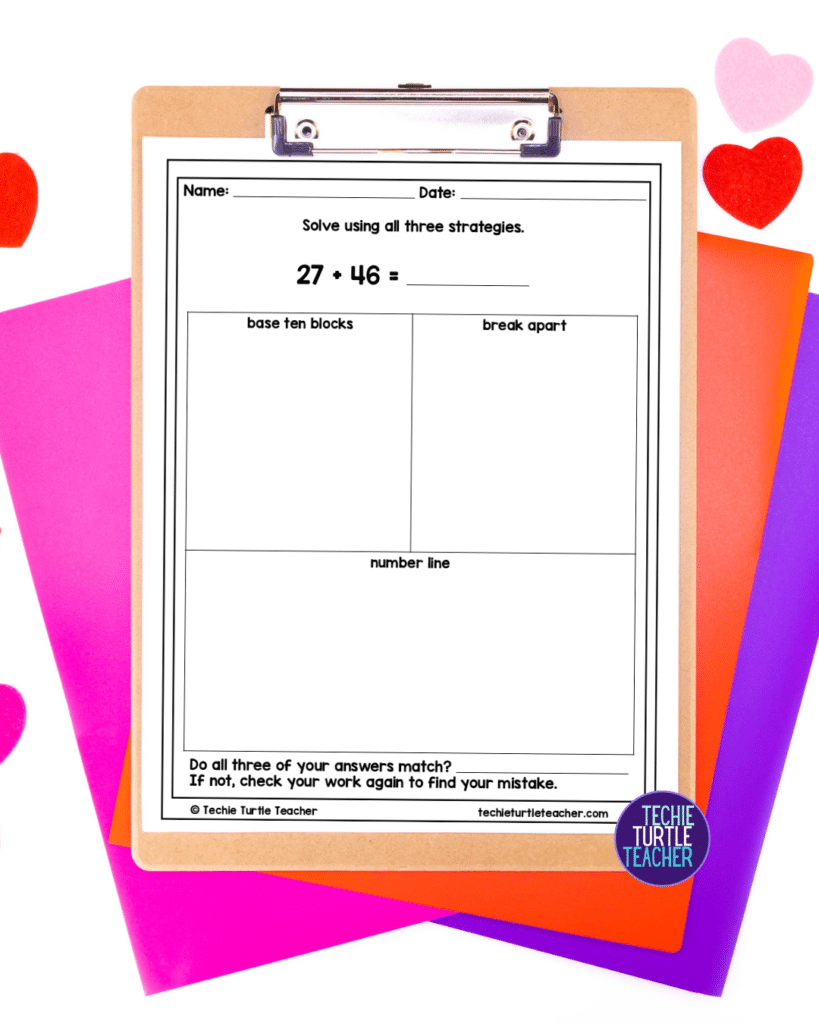
Strategy comparison worksheets naturally slow students down in the right way. When students solve the same addition or subtraction problem using base ten blocks, break apart (partial sums or differences), and an open number line, they begin to see how the math connects.
One group might work with blocks while another breaks apart the numbers. A third might draw jumps on a number line. When they come back together, the conversation becomes the focus.
What stayed the same across all three strategies?
Where did regrouping show up?
Which method made the most sense?
Those discussions strengthen addition and subtraction strategies without increasing workload. The structure is clear, the expectations are focused, and the thinking runs deeper.
That kind of work fits naturally into small groups, intervention blocks, or a short segment within a larger lesson. It adds intention without adding prep.
I’ve made your job easier by creating these 3-strategy worksheets so you don’t even have to think about the problems students need to solve!
And the best part about these simple math activities – they are only $1!
When the Week Is Already Full
February also brings its own interruptions. Valentine’s Day math activities, card exchanges, adjusted schedules, and an overall rise in excitement can shift the feel of the room quickly.
Having a simple math fact game ready can help keep students engaged without requiring detailed instructions. A Valentine-themed addition or subtraction game still practices core skills, but the seasonal touch keeps it appropriate for the week. Dice. Counters. Familiar procedures. Steady expectations.
The goal is not to entertain for the sake of entertainment.
It is to protect instructional time while honoring the season.

Choosing Simple on Purpose
February does not usually unravel a classroom overnight. It shows up gradually in slower starts, longer transitions, and planning that feels heavier than it did before.
That is exactly why simple math activities can make such a difference this time of year.
Low-prep math activities.
Predictable independent work.
Intentional strategy comparison.
None of these are dramatic changes. They are small, steady choices that protect both student thinking and teacher energy.
Sometimes the most strategic move in February is not adding something new.
It is choosing something simple on purpose.
Want to Read More About Simple Math Activities?



Pin this to Pinterest for later