Table of Contents
As a busy teacher, planning and prepping low-prep math centers each week can feel like an endless cycle.
It’s time-consuming, and just when you think you’ve got everything ready, it’s time to start all over again for the next week.
If you’re feeling overwhelmed, you’re not alone – many teachers find themselves buried under a mountain of materials, trying to keep students engaged while also managing their other responsibilities.
But what if there was a way to make your math centers run smoothly without that constant pressure to create something new every week?
The secret to low-prep math centers that work is simpler than you might think.
In this post, I’ll share how you can use what you’ve already created, rotate those resources, and keep your students engaged without adding to your workload.
The Problem with Weekly Prep for Low-Prep Math Centers
Creating fresh, engaging materials for low-prep math centers every week can feel like an endless cycle.
With so many different activities, worksheets, and games to prep, it’s easy to get bogged down by the constant pressure to come up with something new.
Not only is this time-consuming, but it also takes away from other important tasks, like lesson planning, grading, and spending quality time with your family.
And let’s not forget about the students.
While variety in activities may seem exciting, it can actually create confusion for young learners.
When you switch up resources every week, they don’t always know what to expect or what to do.
This can lead to frustration, decreased independence, and a lack of focus during center time.
By sticking to a routine with familiar resources, you’re helping your students build confidence and become more independent.
They’ll know exactly what to do when they see a familiar activity, making transitions smoother and allowing them to engage more fully with the content.
Instead of spending your time planning new activities every week, you can focus on fostering a calm, organized environment where your students thrive.
Read more about the importance of routine in the classroom.

The Secret: Reuse & Rotate Low-Prep Math Resources
The key to making low-prep math centers work – without the weekly prep burnout – is reusing and rotating resources you’ve already made.
You don’t need a brand-new activity every Monday.
Instead, lean on the materials that are already working for your students.
When you rotate familiar activities, you cut your prep time dramatically while still keeping things fresh for your students.
A well-designed game or hands-on activity can be used across different weeks with small tweaks or simply revisited as students cycle through various skills.
This approach helps maintain engagement because students already understand how the activity works.
Instead of wasting time explaining new directions each week, you can dive right into learning.
Best of all, it gives you back your time – no more late nights searching for new center ideas.
Benefits of Rotating Resources in Low-Prep Math Centers
Time-Saving
Reusing activities means you’re not starting from scratch every week.
You’ve already done the hard work – now it’s just about being strategic with when and how you use each piece.
Consistency
Using familiar formats helps your students feel more confident and independent.
They know the routine, which makes centers run more smoothly and allows you to focus on small groups or individual students who need support.
Customization
You can reuse the same activity but change the content.
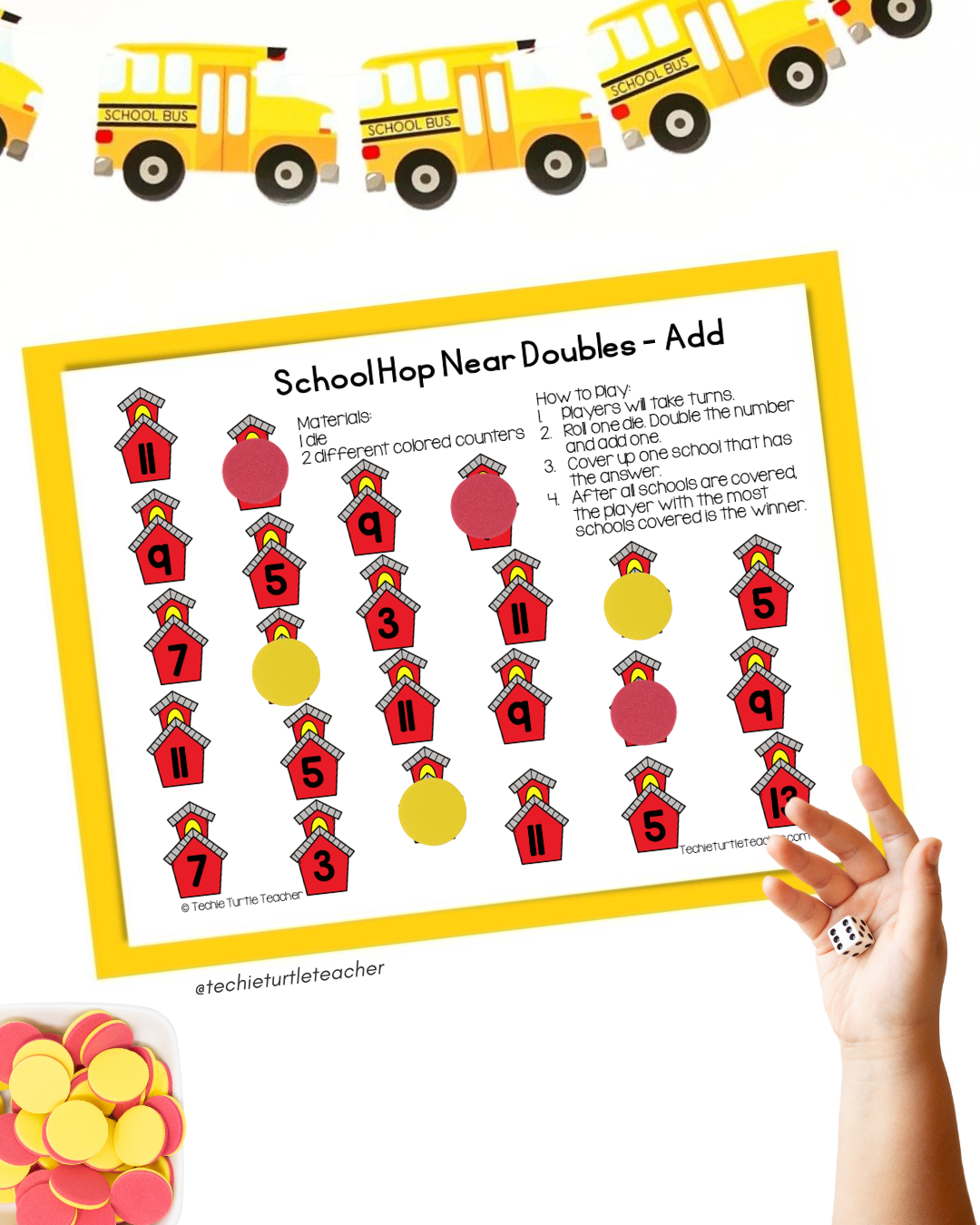
For example, a roll-and-cover game can be used for addition one week and subtraction the next, just by swapping the numbers.
Engagement
Students love returning to activities they enjoy.
By rotating games and tasks they already like, you keep them excited without having to teach a whole new game.

How to Get Started with Low-Prep Math Centers
Organizing Resources
Start by sorting your materials into categories – by strategy (like making ten or doubles), by operation (addition/subtraction), or by format (games, task cards, printables).
This makes it easier to grab what you need quickly.
Planning in Advance
Create a simple rotation schedule.
Even a 3- or 4-week cycle can take the guesswork out of planning.
Knowing what’s coming lets you prep once and use materials again and again.
Creating Versatile Materials
When you’re designing or choosing resources, look for ones that can be used in multiple ways.
Activities with open-ended formats or editable components can stretch across different skills and levels.

Examples of Reusable Activities for Low-Prep Math Centers
- Flashcards or Task Cards
Use these with a variety of games – memory, matching, scoot, or partner quizzes. The same set can be revisited multiple times with new instructions or groupings. - Printable Games
Games like roll-and-cover, bump, or board games are perfect for repeated use. Swap out the numbers or focus area, and it feels new without needing to teach a whole new game. - Simple Worksheets
Worksheets that follow a consistent format but focus on different skills make great independent work. Students can complete them with confidence, and you won’t need to reteach directions.
Give Low-Prep Math Centers a Try
You don’t need to start from scratch every week to run effective low-prep math centers.
By reusing and rotating the resources you already have, you save time, reduce stress, and help your students become more independent.
The routine gives them structure.
The rotation keeps them engaged.
And you get a break from the prep grind.
Take a few minutes today to organize your materials and sketch out a simple rotation plan.
You’ll be amazed at how much smoother your math block can feel.
Want ready-to-use, low-prep math center activities that are easy to rotate?
Grab your free choice board here.
Pin this to Pinterest for later