Teaching addition can get tricky once students have to move beyond basic facts and start working with larger numbers. Here you’ll find strategies, practice, teaching tips, and free resources to help students make sense of 2-digit addition.
Why I Teach Strategies Before the Standard Algorithm
I don’t start 2-digit addition by teaching students to line up the numbers and add. I want them to understand why the algorithm works before they rely on a set of steps to get an answer.
When students work with different strategies first, they have opportunities to think about tens and ones, break numbers apart, use what they know about place value, and make sense of the numbers they’re adding.
The goal isn’t for students to memorize a bunch of different ways to solve every problem. It’s to give them strategies that help them make sense of addition and build number sense before moving to the standard algorithm.
Do Students Need to Learn Every Strategy?
Students do not necessarily need to learn every strategy, but it varies from student to student!
I don’t think students need to master every strategy or use a specific strategy just because it was taught to them. I want to give them strategies they can understand and use, and then help them recognize which ones make sense for different types of problems.
2-Digit Addition Strategies that Build Number Sense
These are the strategies I use to help students think about 2-digit addition before moving to the standard algorithm. Click the links to learn more about each strategy.
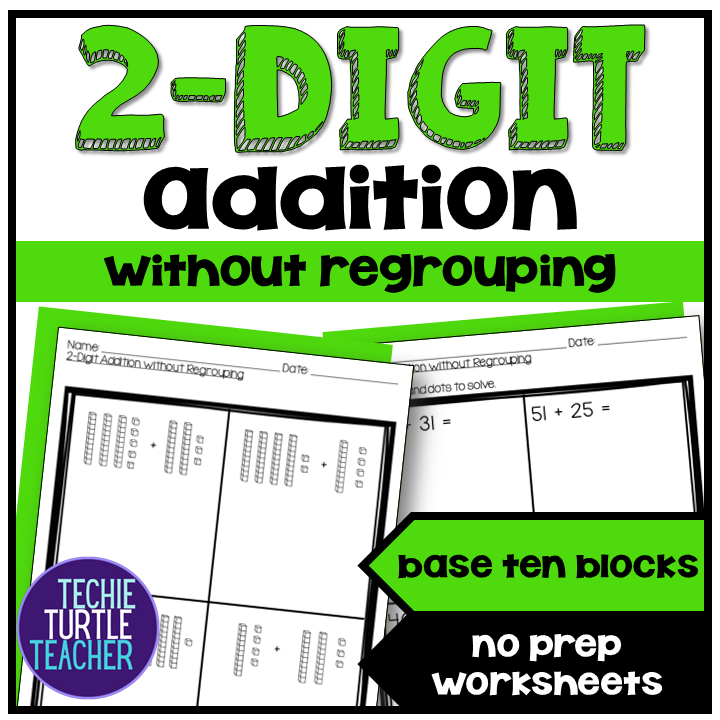
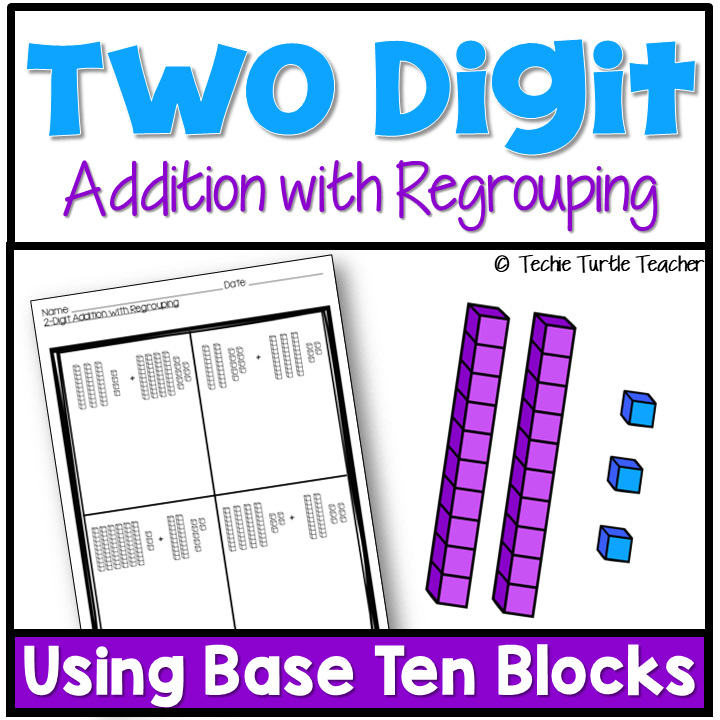
Base Ten Blocks Strategy – start with a concrete model so students can see the tens and ones they’re adding
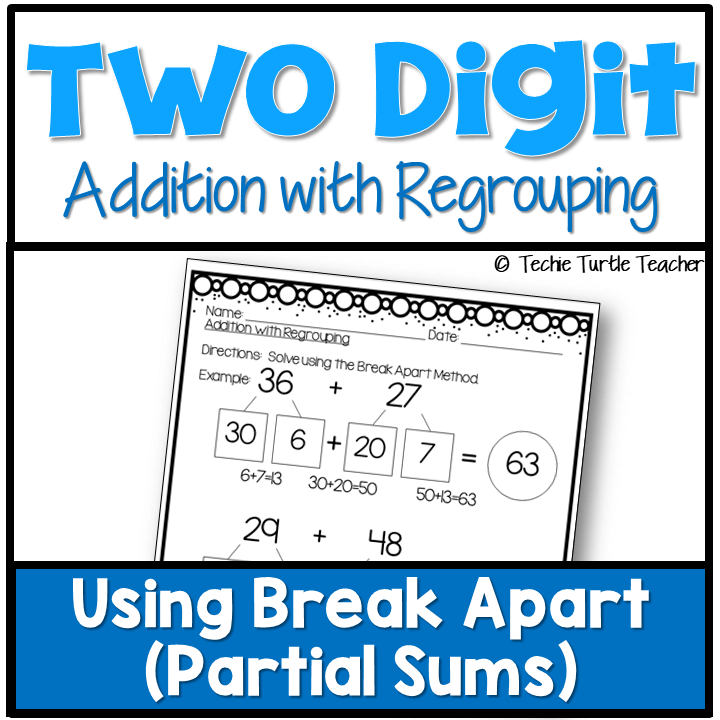
Break Apart Strategy – break numbers into tens and ones and add the parts separately
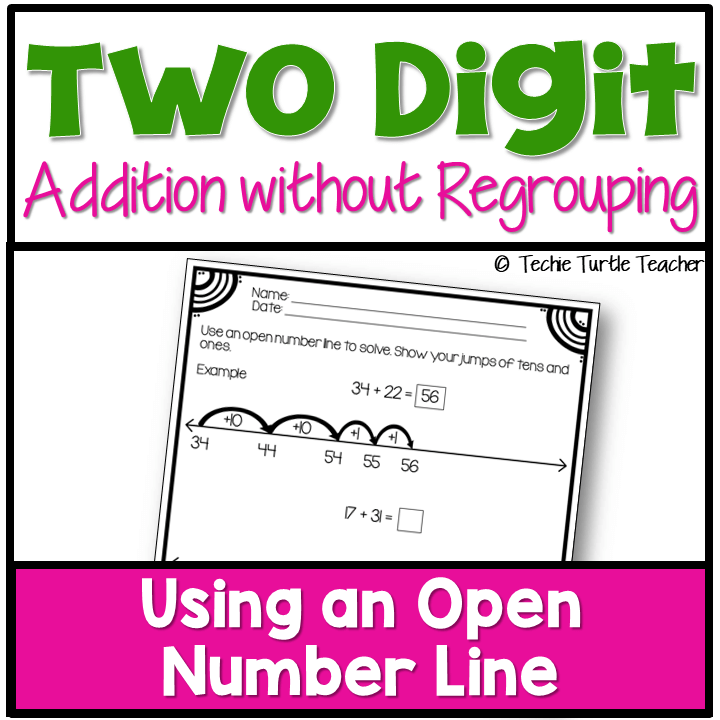
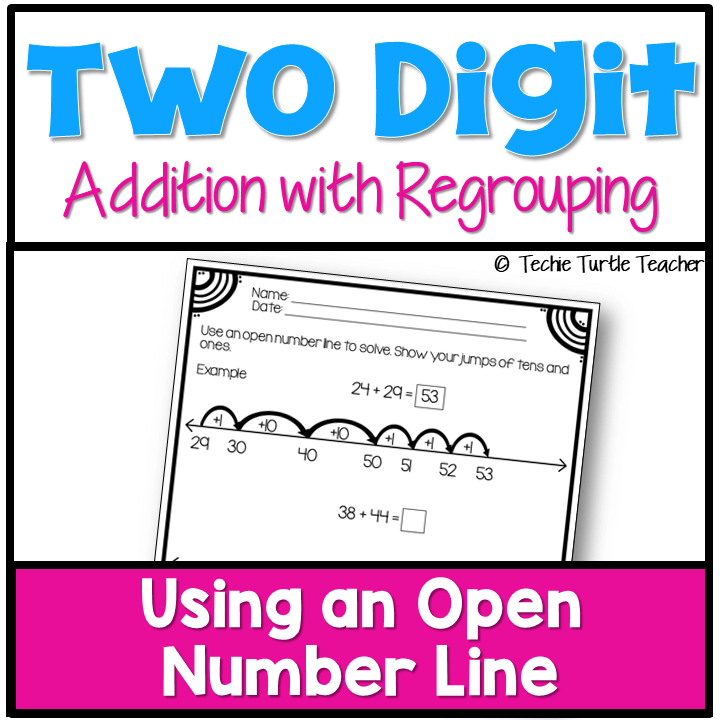
Open Number Line Strategy – use jumps to represent adding tens and ones and visualize how the numbers change
When I Introduce the Standard Algorithm
Once students have had opportunities to build an understanding of 2-digit addition using place value and different strategies, I introduce the standard algorithm.
At that point, the algorithm isn’t just a series of steps to memorize. Students have a better understanding of what they’re actually doing when they add the ones and tens.
This becomes especially important when students begin adding with regrouping. If they understand that 10 ones can be composed into a new ten, the regrouping step has meaning instead of being something they simply remember to carry.
Ready for 2-Digit Addition Practice?
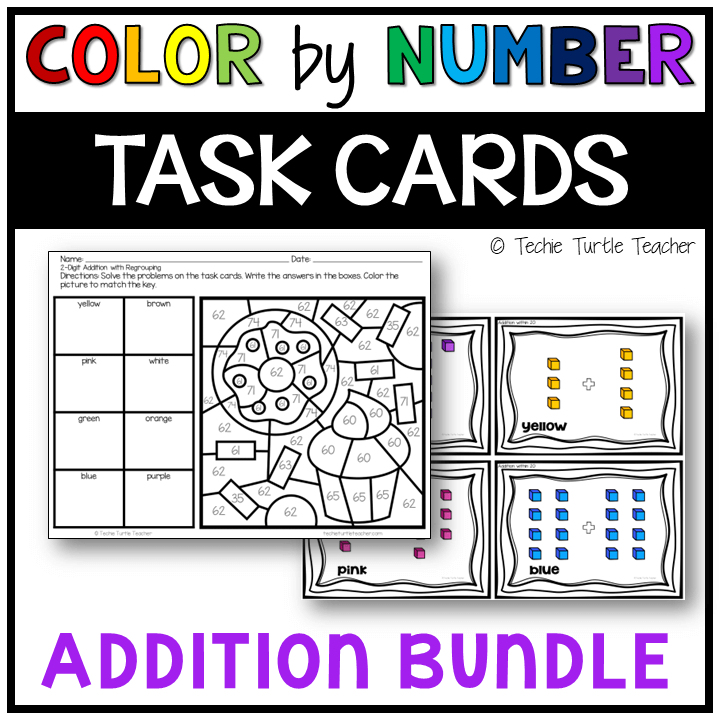
Once students understand the strategies, they need opportunities to practice them with different numbers and problem types.
Practice 2-digit addition without regrouping using base ten blocks
If you’re teaching 2-digit addition and want all of the pieces ready to go, I created a 2-Digit Addition Toolkit that brings the strategies, practice, error analysis, and teacher support together in one place.