Parent involvement in math facts is one of the biggest difference-makers in building fluency.
Have you ever noticed how quickly math fact fluency can make or break a lesson?
When students know their facts, problem solving flows.
They spend their energy thinking through strategies instead of stopping at every turn to count on their fingers.
But when those facts aren’t secure, even simple problems become roadblocks.
The hard truth is that we don’t always have enough classroom minutes to get students where they need to be.
We squeeze in fluency warm-ups.
We build in small-group practice.
We encourage math games and quick drills.
But it still doesn’t feel like enough.
And it’s not just you… every teacher I know has felt the same way.
That’s why parent involvement in math facts matters so much.
When practice continues at home, kids make faster progress and feel more confident in class.
But here’s the catch: getting parents on board isn’t always easy.
Table of Contents
Why Parents Struggle with Math Facts at Home
I’ll be honest… when I used to send home flashcards, I pictured families happily practicing around the dinner table.
The reality? Parents told me the cards stayed in backpacks.
Others admitted that practice ended in tears.
Some even said they didn’t understand the strategies we were teaching in class, so they weren’t sure how to help.
And that’s not surprising.
Parents want to support their kids, but:
They often rely on old-school drills because that’s what they know.
They don’t feel confident with “new” math strategies.
Their busy schedules leave little room for math facts practice activities.
It’s no wonder students come back to school without much progress made.

A Simple Way to Bridge the Gap
I created my Math Fact Guide to make life easier… for both you and the parents in your classroom.
It’s a short, teacher-friendly resource you can hand to families without any extra prep work on your end.
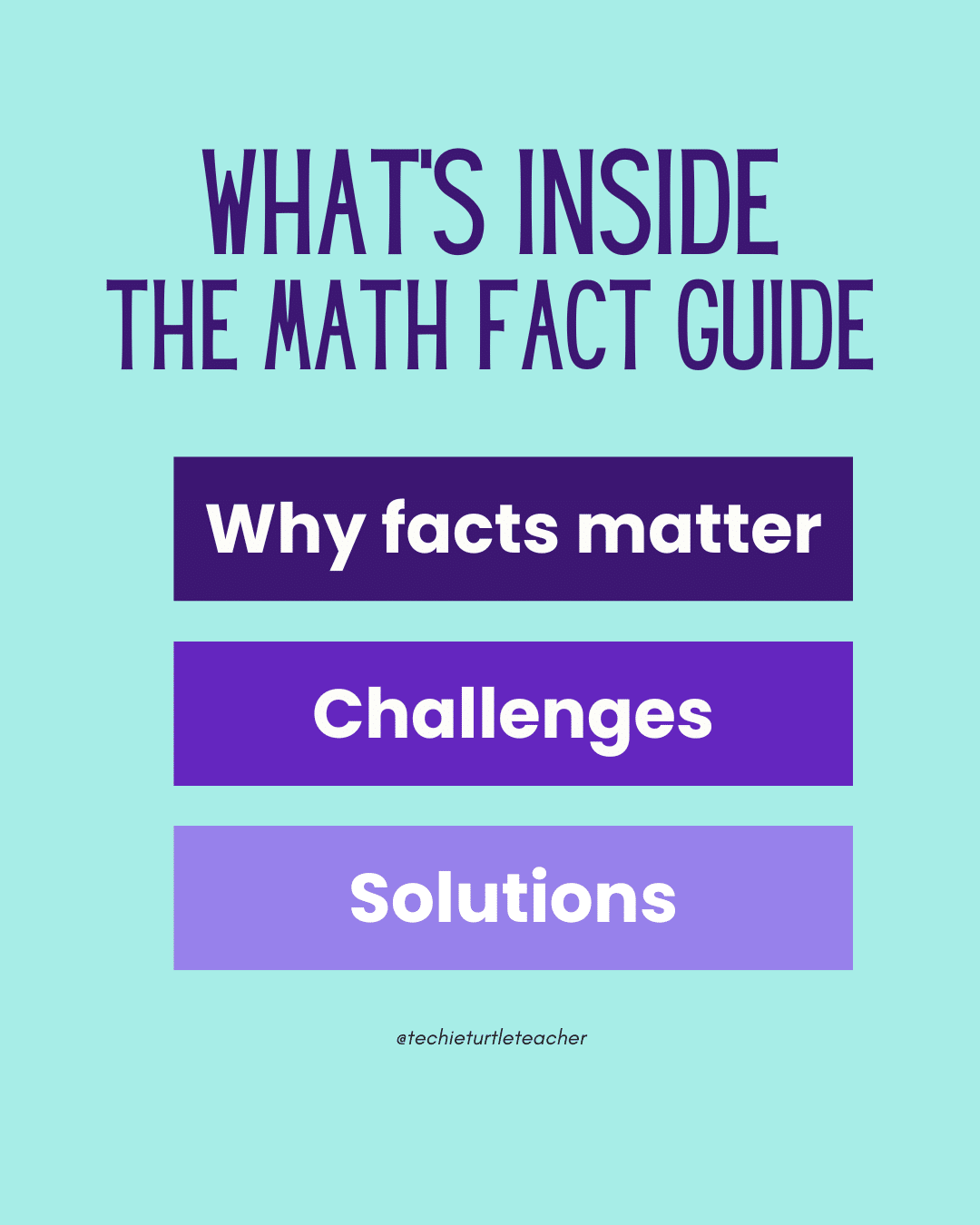
Inside this 4-page guide, parents will find:
- Why math fact fluency at home matters. Clear explanations of how fact fluency impacts bigger math skills, written in a way parents can understand.
- Common challenges families face. Honest acknowledgment of the struggles that come with practicing at home… and reassurance that they’re not alone.
- Solutions that actually work. Practical, no-prep ideas that make helping kids with math facts less stressful and more doable for busy families.
And the best part? You don’t have to write a single thing.
You can use this guide as-is, knowing you’re giving parents tools that support your teaching instead of working against it.
How You Can Use the Guide

One of the things I love most about this guide is how versatile it is.
You can:
- Send it home at the start of the year to set the tone for parent involvement in math facts.
- Share it during conferences when fluency comes up in conversation.
- Use it in newsletters by pulling out one tip at a time.
- Keep it on hand for parents who ask, “How can I help my child with math at home?”
It takes the pressure off of you to explain the same things over and over, and it empowers families to take action.
Why This Matters for Your Students
When home and school work together, kids win.
They see consistency in expectations.
They get extra practice in ways that don’t feel overwhelming.
And most importantly, they start to see themselves as capable mathematicians.
You don’t need parents to become math teachers… you just need them to be partners.
And this guide gives them the confidence to do exactly that.
Grab Your Free Math Fact Guide

If you’ve ever wished for a simple way to get parents involved in math facts practice, this guide is for you.
It’s short, practical, and ready for you to use tomorrow.
Download your free Math Fact Guide today and take the first step toward stronger home-school connections and more confident math students.
Pin this to Pinterest for later