Independent math work is supposed to make small group instruction easier.
But for many teachers, it does the opposite.
The moment small group starts, hands go up across the room. Students call the teacher’s name. Someone asks what to do next. Someone else says the work is too hard.
It starts to feel like independent work isn’t really independent at all.
Often the issue isn’t the students. It’s the expectations surrounding what independent work is supposed to look like. Many common assumptions about independent math work actually make it harder for students to manage it successfully.
Here are five of the most common myths that can make math time more frustrating than it needs to be.
Table of Contents
Myth #1: Independent Math Work Has to Be Silent
Many teachers picture independent math work as a completely quiet classroom where every student is working alone at their seat.
But silence isn’t what makes work independent.
What really matters is whether students can run the activity without constant help from the teacher.
Two students playing a math fact game can still be working independently if they understand the rules, take turns correctly, and stay focused on the math.
When the routine is predictable and the expectations are clear, students can manage the activity themselves.
Partner games often support independence better than worksheets because the structure is built into the game.
Seasonal math games can work especially well because the theme keeps students engaged while the routine stays familiar.
Teachers looking for something simple to add to their math block can explore these St. Patrick’s Day math fact games designed for doubles, near doubles, and making ten strategies.
When students already understand how the game works, the teacher doesn’t need to reteach directions every time the activity appears.

Myth #2: Students Should Never Ask “What Do I Do Now?”
One of the most common interruptions during math time is a student asking, “What do I do now?”
Often this question doesn’t come from students trying to avoid work. It usually happens because they’ve finished the task and aren’t sure what the next step should be.
When students don’t have a clear plan for what to do next, they naturally turn to the teacher.
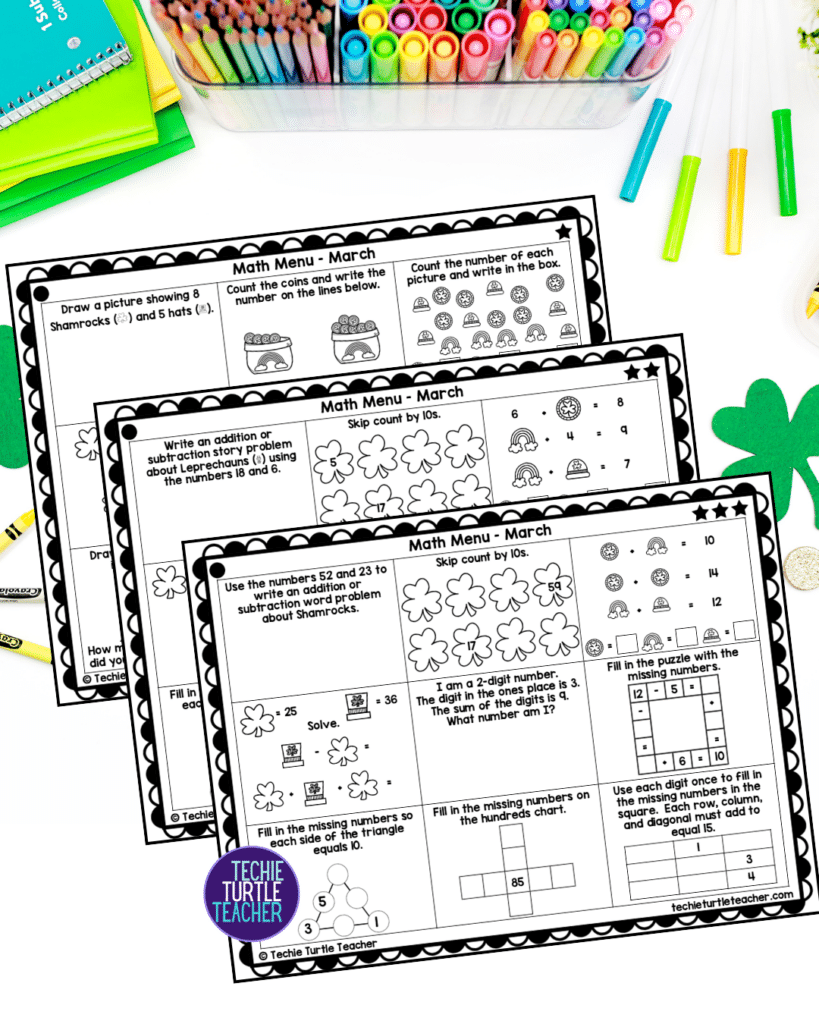
That’s why predictable structures like choice boards can make such a difference. The format stays the same, so students recognize it immediately and understand how to move to the next activity.
Instead of waiting for directions, they already know what the next step is.
If you want to reduce those constant “what now?” questions, you can take a look at my March choice boards.
Because the structure stays consistent, students can continue working without needing the teacher to guide every transition.
Myth #3: Independent Work Should Always Feel Easy
It’s natural to want independent math work to be comfortable for students.
But when every task is designed to avoid struggle, students miss opportunities to think more deeply about the math.
Sometimes the most valuable independent work happens when students have to slow down and analyze what went wrong.
Error analysis activities encourage this kind of thinking. Instead of solving a new problem, students examine someone else’s work, identify the mistake, and explain what should have happened instead.
This process helps students focus on the strategy being used rather than simply rushing toward the correct answer.
It also allows them to work through the thinking independently before asking the teacher for help.
Give your students practice analyzing errors in 2-digit addition with regrouping problems.
Each page shows a problem solved with a specific strategy, and students determine where the mistake occurred. This type of thinking often leads to stronger discussions later during whole group or small group instruction.
Myth #4: When Attention Slips, the Routine Needs to Change
When students start losing focus during math time, it can feel tempting to change everything.
Teachers may wonder if the centers need to be different, if the format needs to be more exciting, or if the entire system needs to be redesigned.
But changing routines frequently can actually make independent work harder for students.
What helps more often is keeping the routine consistent while simply changing the math inside the activity.
When the structure stays the same, students don’t have to relearn directions every time. They already understand how to begin and what the expectations are.
Consistent formats like task cards support this kind of stability. The routine remains familiar while the math problems change.
These March word problem task cards follow a consistent format so students can focus on solving the problem instead of figuring out the activity.
Because the routine stays predictable, teachers can spend less time explaining directions and more time working with small groups.

Myth #5: Independent Work Means the Teacher Stops Teaching
Independent work isn’t meant to replace instruction.
Its purpose is to make instruction possible.
When students can begin their work without waiting for the teacher, try a strategy before raising their hand, and move to the next activity without asking what to do, the teacher gains the freedom to focus on small group teaching.
That kind of independence doesn’t usually happen with a single activity. It develops through consistent routines that students understand and recognize.
Monthly independent work bundles can help maintain that consistency because the structure remains the same across multiple weeks.
If you want your math block to run more smoothly, you can grab the March Independent Math Work Bundle.
When the routine stays familiar, students spend less time figuring out what to do and more time actually doing the math.
What Independent Work Actually Looks Like
Independent math work doesn’t mean every student sits silently at their desk.
It means students can:
- start the activity without waiting for directions
- try a strategy before asking for help
- continue working without constant reminders
- move to the next task when they finish
When those habits are in place, independent work does exactly what it’s meant to do.
It protects the teacher’s small group time while giving students meaningful math practice at the same time.
Want to Read More About Independent Math Work?


Pin this to Pinterest for later