Think back to when you were a kid.
Chances are you had pennies in your piggy bank, quarters for arcade games, or nickels and dimes for the school vending machine.
Kids today don’t get that same exposure.
With debit cards, online shopping, and apps replacing cash, many of our students rarely handle real coins.
That lack of experience shows up in the classroom.
Students mix up pennies and dimes, confuse nickels and quarters, or forget the names altogether.
Before they can ever count money, they need to identify coins confidently.
A big part of how to teach coins effectively is giving students repeated, meaningful practice, not just drills.
Traditional flashcards often lead to frustration.
Students need both exposure and motivation.
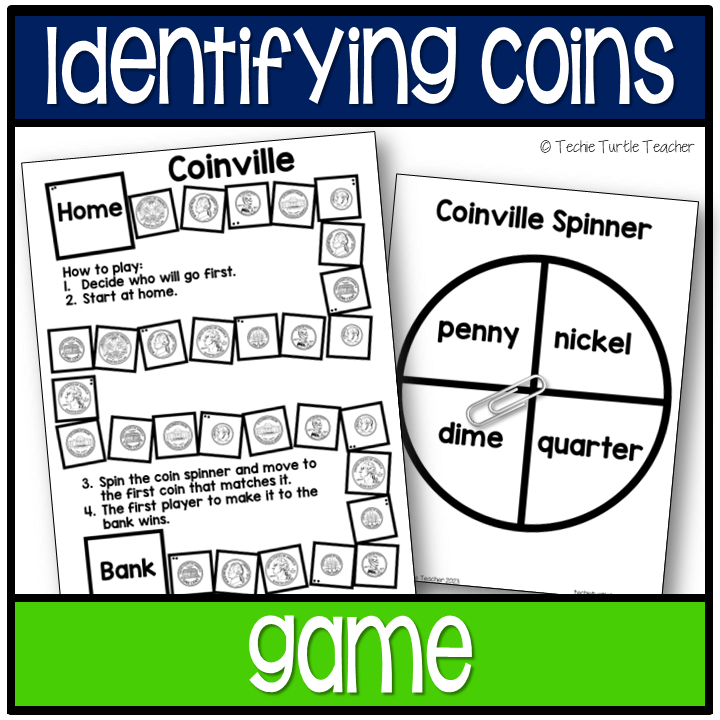
That’s why I created the Coinville game… a free resource designed to help students identify coins while having fun.
Table of Contents
What’s Inside the Freebie
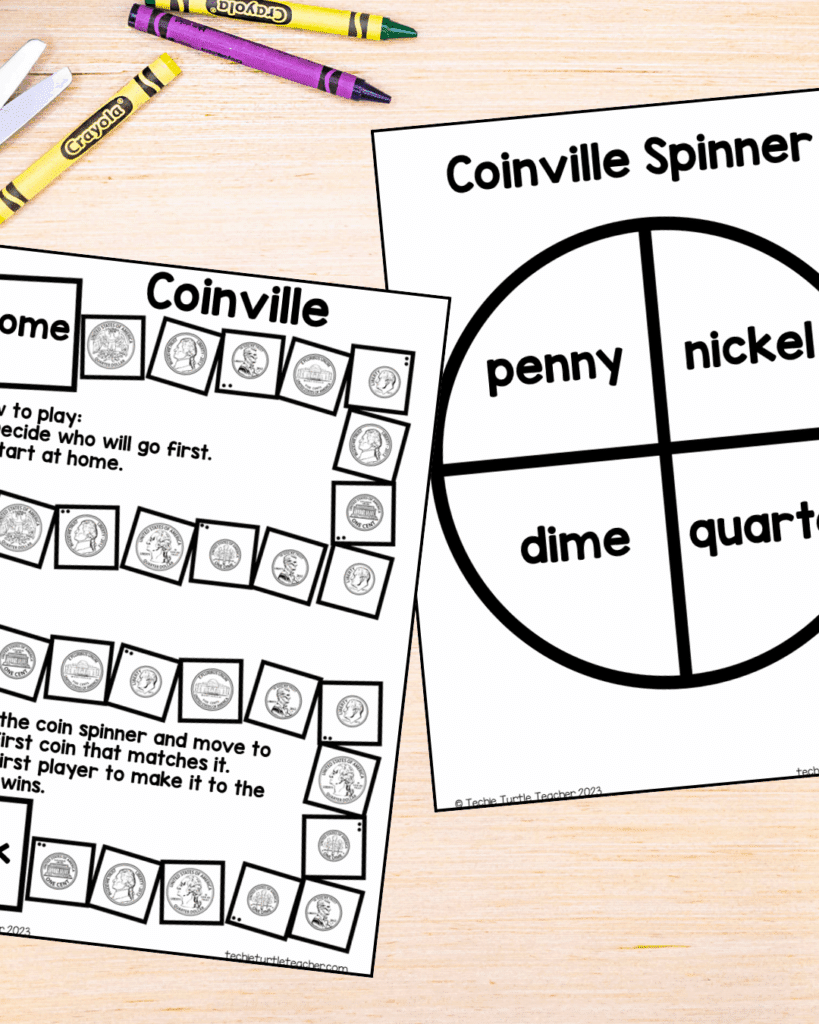
The Coinville freebie includes two versions of the game, so you can choose what works best for your class:
- Spinner version: Students spin to see which space to move to next.
- Card version: Students draw cards from a pile to determine their moves.
Both versions focus on the same goal:
helping students identify coins like pennies, nickels, dimes, and quarters.
If you’re thinking about how to teach coins in a way that actually sticks, this game is a great starting point.
Students practice coin recognition again and again without it feeling like work.
Why This Game Works
Games are one of the most effective ways to teach coins because they offer:
- Repetition: Students see and name the coins multiple times in one round.
- Engagement: The excitement of spinning or drawing a card keeps them motivated.
- Confidence: As they play, they begin to identify coins more quickly and accurately.
This is exactly the kind of low-prep, high-impact activity that makes practicing coins smoother for both teachers and students.

How to Use Coinville in Your Classroom
When you’re deciding how to teach coins, flexibility is key.
Here are a few simple ways to incorporate Coinville:
- Math centers: Print the boards, add dice and a spinner (or cards), and let students play independently.
- Partner work: Students take turns spinning or drawing cards and helping each other identify coins.
- Small group intervention: Use the game to give targeted support to students who still struggle to identify coins.
- Early finishers: Keep a set ready for students to grab when they finish other work.
Because the game is easy to set up and reuse, you can use it all year long whenever your students need extra practice.
Why Students Love It
Students love the game element… rolling dice, moving spaces, and hoping they’ll win.
Both the spinner and card versions add variety, so the activity never feels stale.
Even students who typically resist practice are more willing to identify coins repeatedly because they’re genuinely engaged.
And every spin, every card, every turn is another chance to get better at recognizing and naming coins.
This makes it one of the most enjoyable and practical strategies for how to teach coins.
Grab Your Free Coinville Game
If your students struggle to identify coins, this freebie is the perfect solution.
It’s a ready-to-go activity that makes teaching coins simple, engaging, and effective.
Download the free Coinville game today to give your students meaningful practice and build strong coin recognition skills in your classroom.
Pin this to Pinterest for later