Table of Contents
Differentiation in math always sounded good in theory.
But in real life?
It felt like prepping three (or more) different versions of every single lesson.
I wanted to meet my students where they were.
I wanted them all to feel successful in math.
But I was also tired, overwhelmed, and constantly short on time.
That’s why I started looking for ways to simplify differentiation in math – without sacrificing student growth.
And over time, I found a few strategies that actually worked.
Now, those same ideas are built into the math resources I create, so other teachers don’t have to start from scratch.
Here’s what made the biggest difference in my classroom when it came to differentiating math instruction:

1. Use the same game with different strategies
One of the easiest ways I approached differentiation in math was through flexible games.
I didn’t need three totally different activities – just three versions of the same one.
If we were practicing addition facts, some students played the game with doubles (like 4 + 4), others used making ten facts (like 6 + 4), and a third group worked on near doubles (like 6 + 7).
The directions stayed the same.
The game pieces stayed the same.
But each student was practicing what they needed most.
That one small shift meant less prep for me – and more success for them.
My Fall Math Fact Games are designed with this kind of math differentiation in mind.
They make it easy to adjust the difficulty while keeping the activity familiar.
It’s a simple strategy that supports learning without overcomplicating your plans.

2. Keep the word problem but adjust the numbers
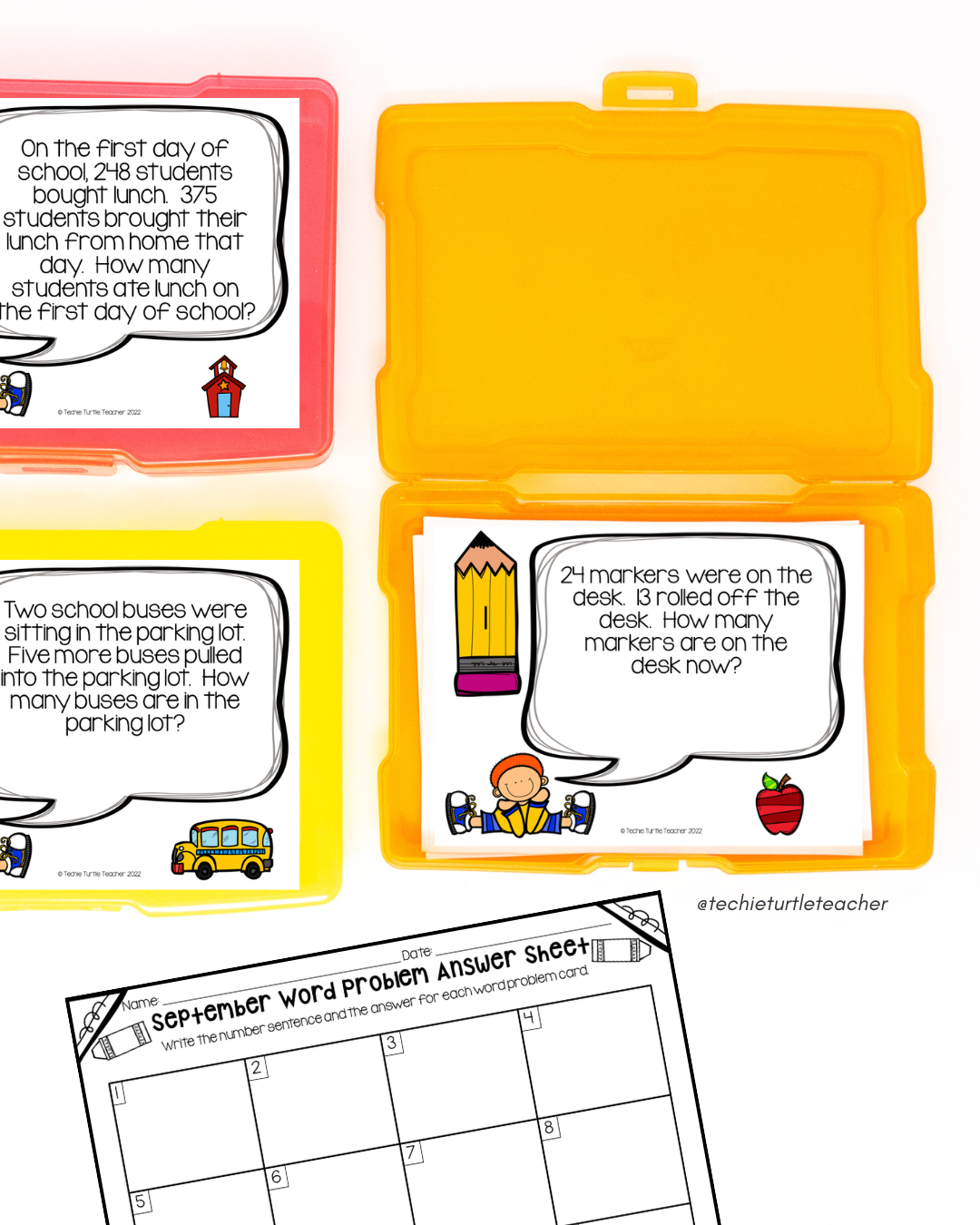
Another effective way I simplified differentiation in math was using the same word problem for the whole class but tweaking the numbers.
If the problem was about apples in a basket, one student might solve 7 + 5, while another tackled 17 + 25.
The wording and context stayed the same, which helped all students feel confident because they knew what to expect.
But the numbers were just right for their skill level.
This small tweak allowed me to stretch some students while supporting others – and no one felt left out or left behind.
My September Word Problem Task Cards made this process even easier.
I could use the same card across the class and simply change the numbers on the fly or give students different versions based on what they were ready for.
It’s another way to bring differentiation in math into your day without creating more work.
3. Same Problem, Different Strategies
Instead of assigning the same worksheet to every student, I gave them strategy-based tools that matched how they learned best.
Some students built numbers with base ten blocks.
Others used number lines to count on or back.
And some preferred the break-apart strategy to add tens and ones.
We were all working on 2-digit addition – but each student used a method that made the most sense to them.
This helped them develop confidence and fluency, while giving me clear insight into which strategies they had mastered.
That’s exactly how I designed the 2-Digit Addition Strategies Worksheets – so you can assign just the strategies your students need, without overwhelming anyone (especially you).
This is differentiation in math that supports both the learner and the teacher.

4. Give students leveled choices
One of my biggest time-savers was using math choice boards.
Instead of creating customized plans for every student, I offered a menu of tasks with different levels of difficulty.
My September Choice Boards included a variety of activities at different levels.
This allowed students to work at their own pace and skill level while I focused on small group instruction.
Giving students leveled choices created a natural structure for differentiation in math and helped them take ownership of their learning.
And since everything was already built into the board, I didn’t have to spend hours planning multiple versions of an activity.

Differentiation in math doesn’t have to be complicated
I know how overwhelming it feels to want to support every student – without drowning in prep.
But the truth is, differentiation in math can be simple when the right tools do the heavy lifting.
That’s why I design all of my resources to include multiple levels, clear directions, and low-prep options – so you can meet your students where they are without burning yourself out.
By using strategies like flexible games, leveled word problems, strategy-specific worksheets, and choice boards, you’ll make differentiation in math feel manageable and effective.
Want to try one?
Grab my free math choice board and give your students a small taste of independent learning that actually works.
Pin this to Pinterest for later