3-Digit Subtraction with Regrouping Using Base Ten
This post may contain affiliate links and I will be compensated if you make a purchase after clicking on my links. I only recommend products that I use and love.
Table of Contents
3-Digit Subtraction with Regrouping Using Base Ten Blocks
This strategy can feel like a big jump for some students, which is why I always start with a hands-on, visual approach using base ten blocks.
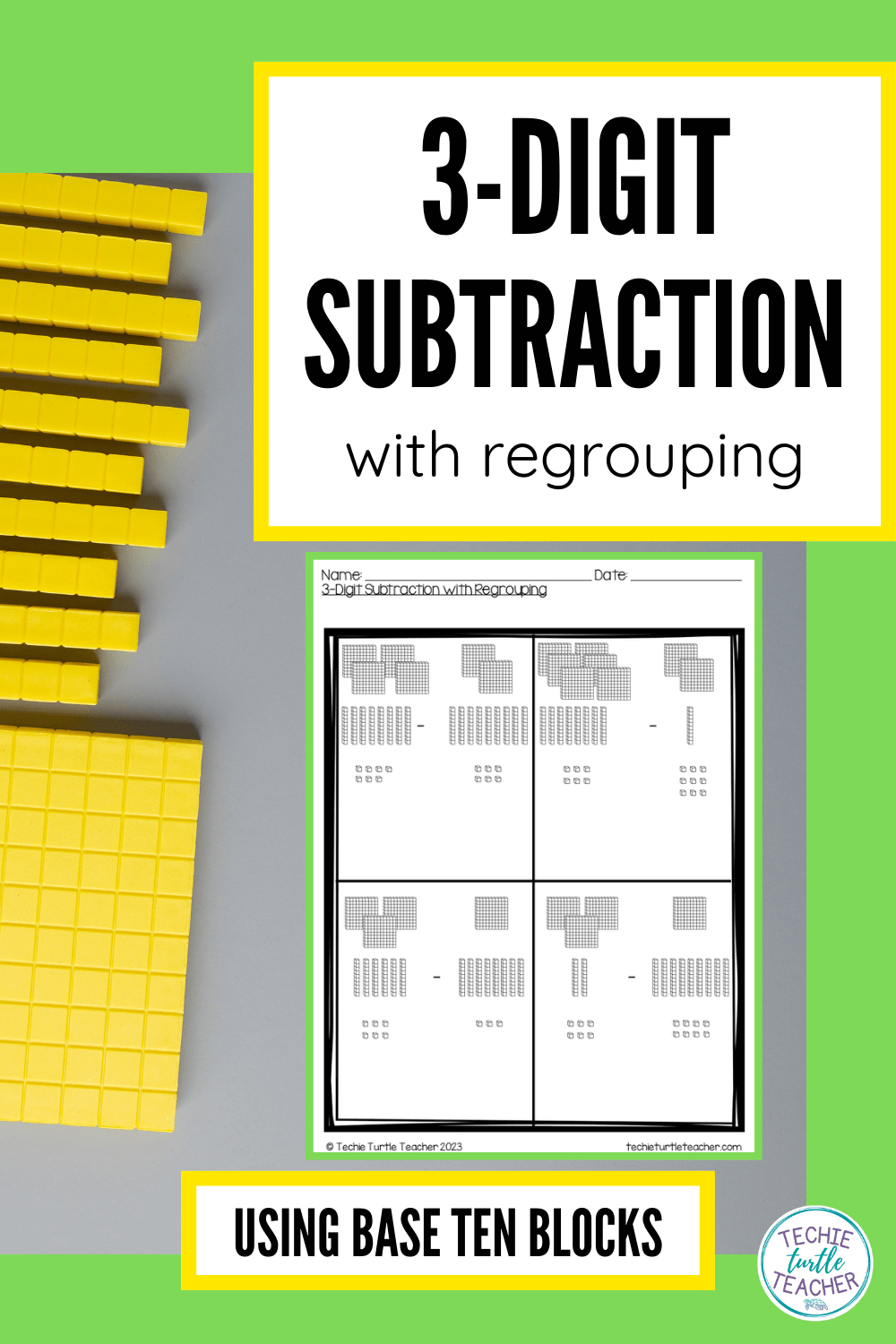
Before getting started, if you’re looking for step-by-step support and no-prep practice pages that walk your students through this method, I have a resource that’s ready for you to use.
It pairs perfectly with everything I’m sharing in this post.
Why Use Base Ten Blocks for 3-Digit Subtraction with Regrouping?
When teaching 3-digit subtraction with regrouping, base ten blocks give students a concrete way to visualize regrouping and understand what’s really happening when a number “borrows.”
I always begin with physical base ten blocks. I like these foam ones because they are quiet on the desks!
Then we move to drawing base ten blocks on paper.
Finally, we simplify things by drawing squares, sticks, and dots for hundreds, tens, and ones.
This gradual release – from hands-on to symbolic – helps students truly understand the regrouping process instead of memorizing steps.
You can use any base ten blocks, but magnetic ones work great on the board when modeling.
If you’re ready for independent student practice that builds on this same method, my 3-digit subtraction with regrouping resource gives students opportunities to use all three levels: hands-on, drawn, and simplified visual models.
Step-by-Step: 3-Digit Subtraction with Regrouping (Using 487 – 296)
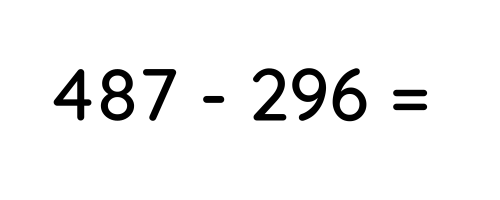
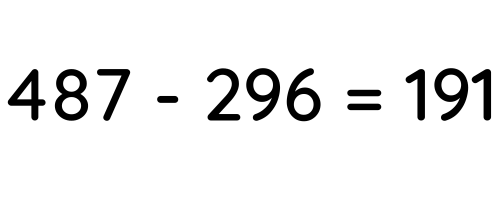
Let’s walk through an example: 487 – 296
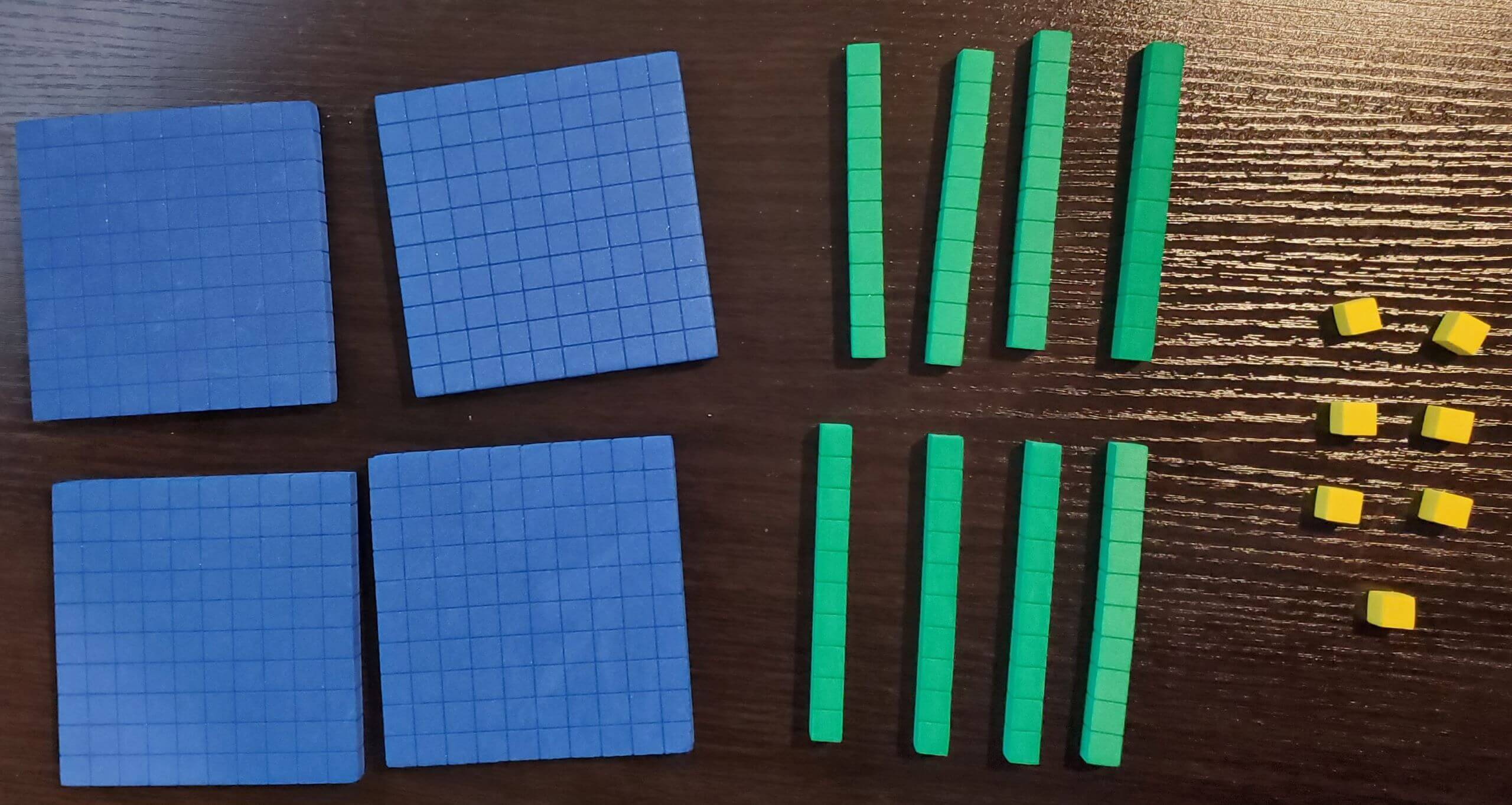
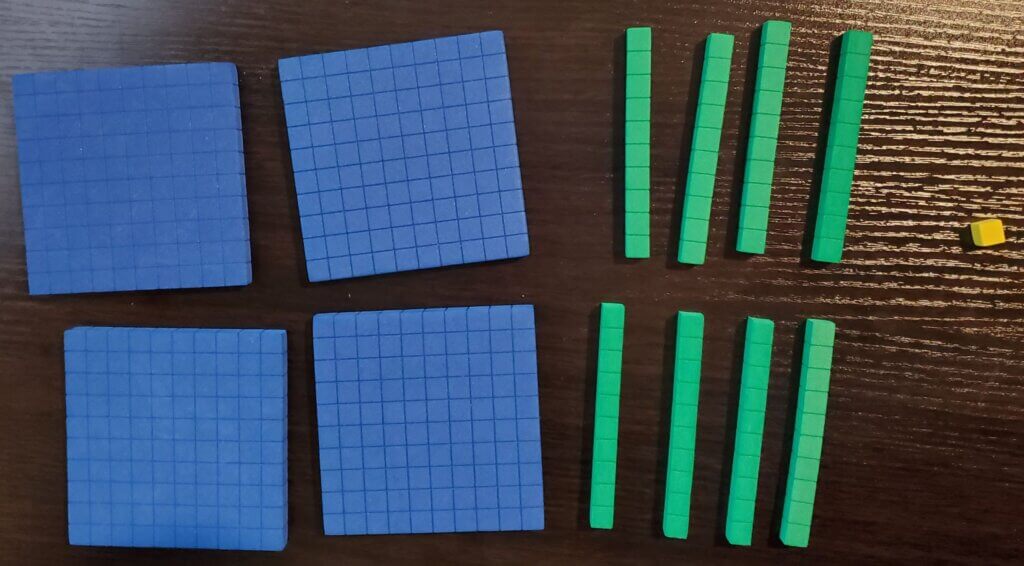
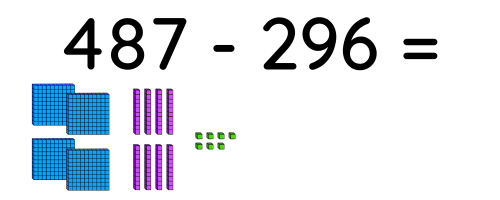
Start by building 487.
I always tell students to build only the first number.
Building both numbers can lead to confusion, especially when regrouping is involved.
You don’t need to build 296.
That number is the amount you’re subtracting, and it will be shown by crossing out base ten blocks during the process.
487
Step 1: Subtract the Ones
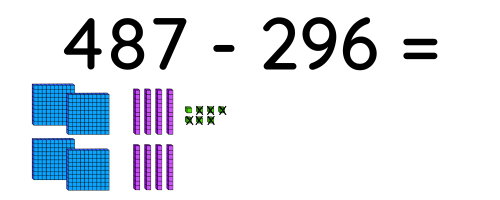
You can subtract 6 from 7 ones without regrouping, so students just remove 6 ones.
487 – 6 = 481
487 - 6 = 481
Step 2: Subtract the Tens
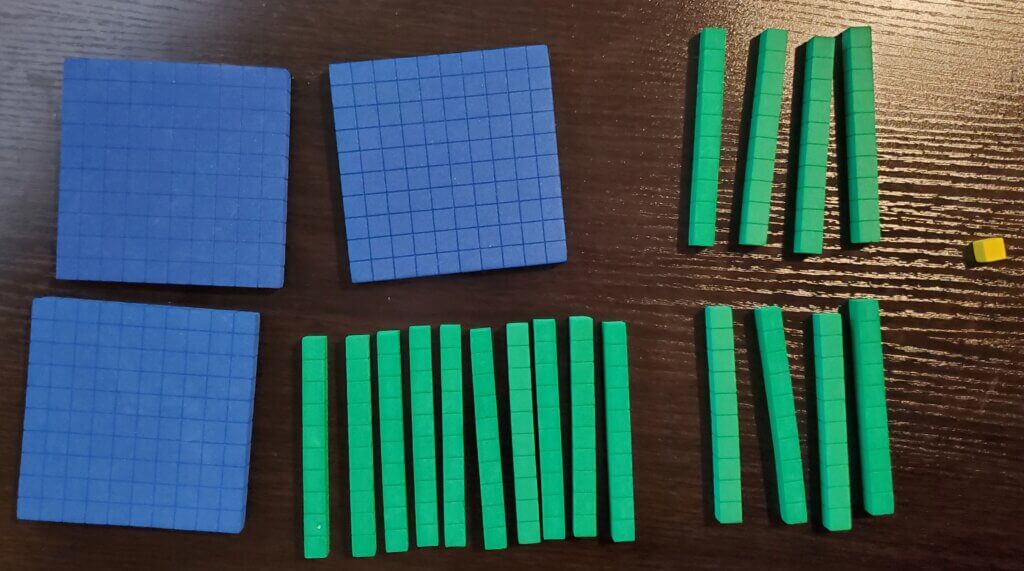
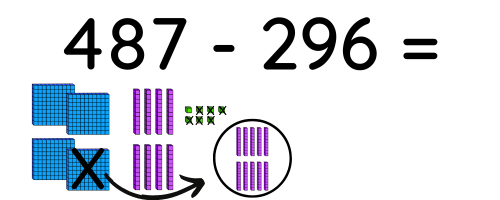
Now we run into a problem. You can’t subtract 9 tens from only 8 tens.
So we regroup: Trade 1 hundred for 10 tens.
one hundred regrouped into ten tens
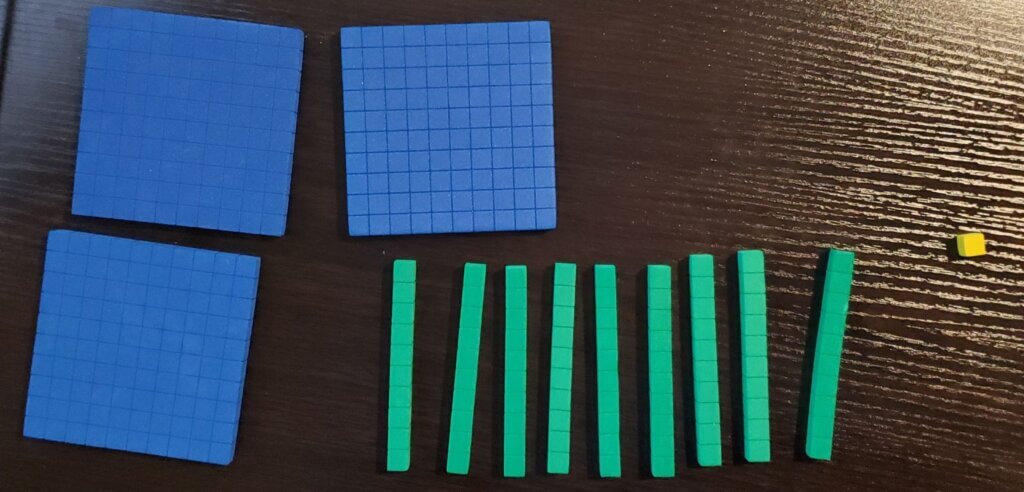
Now subtract 9 tens.
481 – 90 = 391
481 - 90 = 391
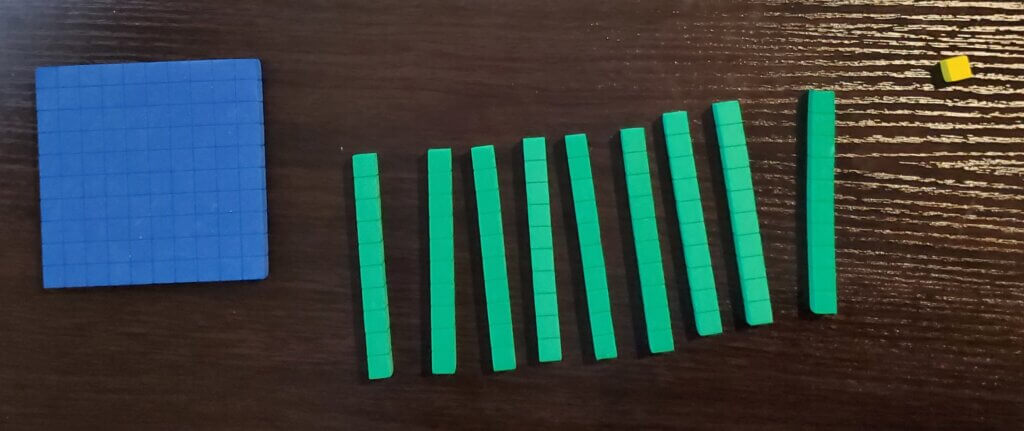
Step 3: Subtract the Hundreds
Now remove 2 hundreds from 3 hundreds. 391 – 200 = 191
It follows this same format to build confidence and consistency.
Moving to Paper: Drawing Base Ten Blocks
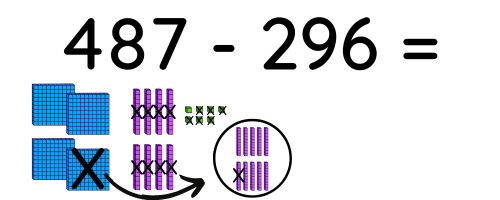
Once students understand the regrouping process with physical blocks, we shift to drawing the base ten blocks.
Use the same problem – 487 – 296 – and have students draw the blocks for 487 only.
Students should start by subtracting the ones.
Cross off 6 ones.
Now it is time to subtract the tens.
The students should recognize they can’t subtract 9 tens because they only have 8.
So they need to regroup.
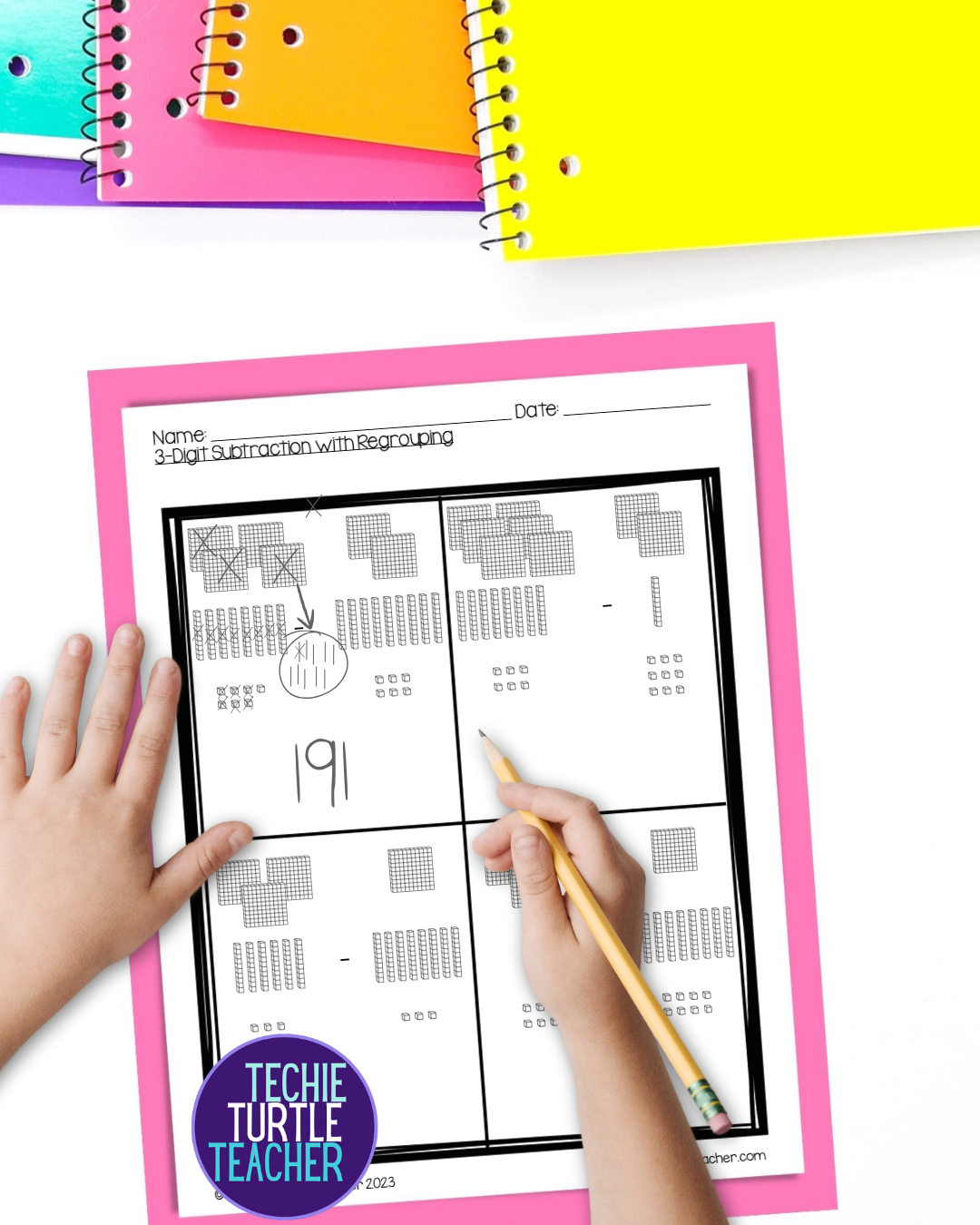
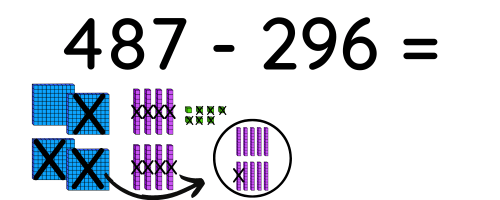
Cross out one hundred and draw ten tens to replace it.
Then the students are ready to subtract 9 tens.
Cross out 9 tens.
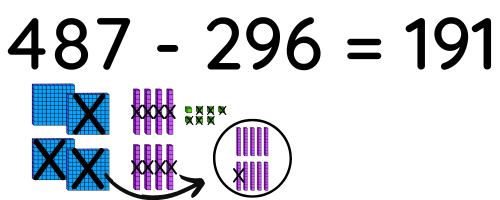
Then subtract the hundreds. So cross out two hundreds.
Important Note: Students need to cross out two more hundreds. The one that is already crossed out is not the hundred in 296. It is the hundred that was regrouped into ten tens.
To get the answer, students need to count the base ten blocks that are not crossed out.
There are 1 hundred, 9 tens and 1 one.
My resource includes this level of practice too – students move from hands-on to drawn models with clear visual instructions so they don’t get lost in the regrouping process.
Once the students master regrouping using pictures of base ten blocks, you can take it a step further.
I like this last version of solving these problems because it is less likely to confuse students this way.
Simplifying the Visuals: Squares, Sticks, and Dots
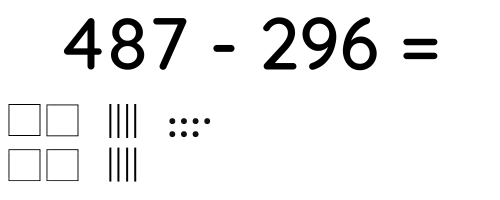
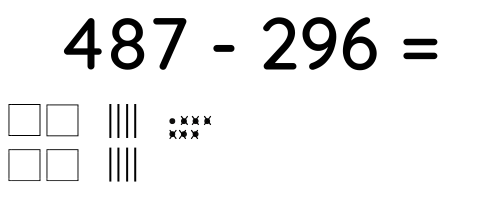
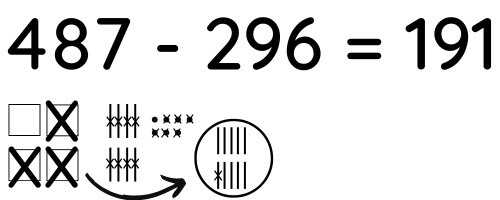
After students are confident with base ten block drawings, I like to introduce a quicker sketching method: squares for hundreds, sticks for tens, and dots for ones.
This version saves time but still helps students show their thinking.
They draw 487 with squares, sticks, and dots.
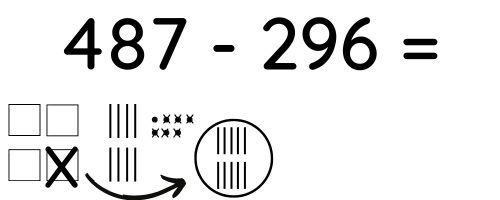
Students should start by subtracting the ones.
Cross off 6.
Now it is time to subtract the tens.
The students should recognize they can’t subtract 9 tens because they only have 8.
So they need to regroup.
Cross out one hundred and draw ten tens to replace it.
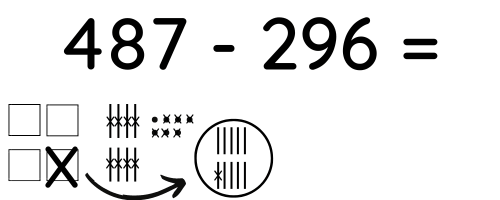
Then the students are ready to subtract 9 tens.
Cross out 9 tens.
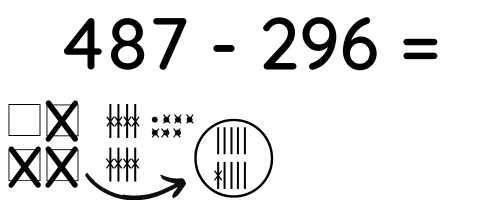
Then subtract the hundreds. So cross out two hundreds.
Important Note: Students need to cross out two more hundreds. The one that is already crossed out is not the hundred in 296. It is the hundred that was regrouped into ten tens.
To get the answer, students need to count the base ten blocks that are not crossed out.
There are 1 hundred, 9 tens and 1 one.
This is one of my favorite stages of this strategy because students feel successful – they’re not overwhelmed with visuals, but they’re still grounded in a strong understanding.
To help students organize their thinking, I encourage them to space out their drawings.
When squares, sticks, and dots are too close together, it can be hard to tell which ones are crossed off.
Want your students to get plenty of practice using this method too?
My resource includes printables where students solve with simple visuals like these and even record their thinking in structured boxes.
Let Students Practice Independently (Without Needing You Every Step)
Like any new math strategy, students need repetition to feel confident.
If you want your students to get focused, independent practice on 3-digit subtraction with regrouping, the printable pages in my resource walk them through:
Modeling with base ten blocks
Drawing blocks and visuals
Using squares, sticks, and dots to show regrouping
This makes it easy to give your students meaningful work time, whether you’re pulling small groups or managing a mix of skill levels in your class.