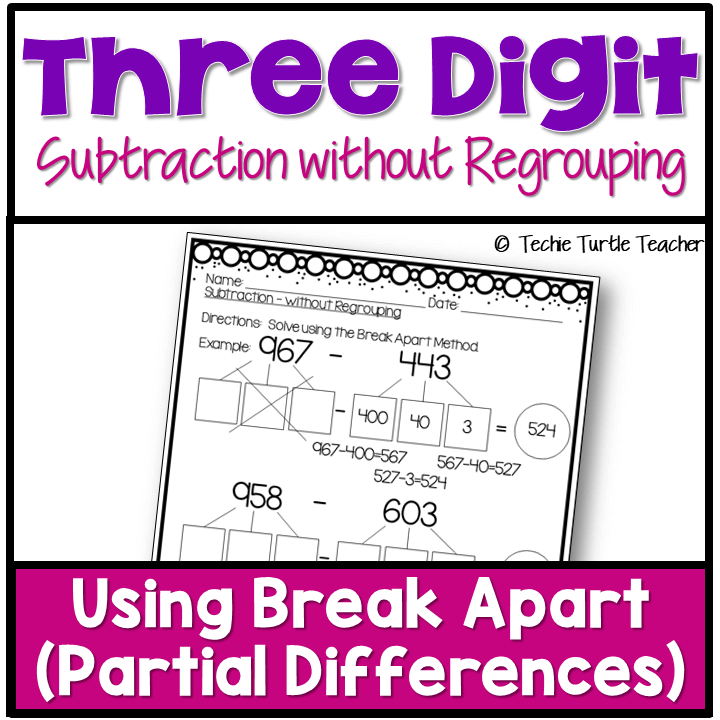
3-Digit Subtraction without Regrouping Using Break Apart
This post may contain affiliate links and I will be compensated if you make a purchase after clicking on my links. I only recommend products that I use and love.
Table of Contents
How to Teach Break Apart 3-Digit Subtraction Without Regrouping
When students are learning how to subtract larger numbers, giving them multiple strategies builds their number sense and deepens their understanding of place value.
One strategy I always come back to is break apart 3-digit subtraction – also known as the partial differences strategy.
If your students are still using hands-on tools, it’s helpful to start with 3-digit subtraction using base ten blocks.
Once they’ve got that down, the break apart strategy is a natural next step.
Let’s walk through how it works and how you can use it to support your students.
Why Use the Break Apart Strategy?
The break apart 3-digit subtraction method helps students visualize numbers broken into hundreds, tens, and ones.
It’s a structured way to reinforce place value while building independence from physical manipulatives.
I typically introduce this strategy once students are confident with base ten blocks.
It bridges the gap between concrete models and abstract thinking, which is key to meeting the 2.NBT.7 standard.
If your students need more support transitioning to this step, I have a printable resource available that walks them through it with scaffolded practice pages.
Step-by-Step Example: 967 – 443
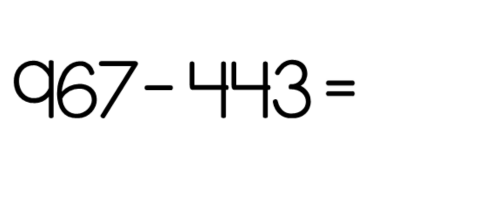
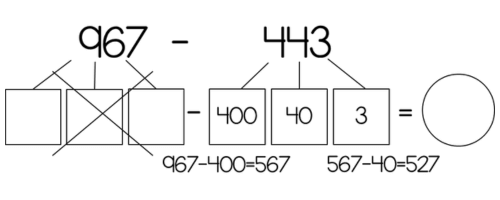
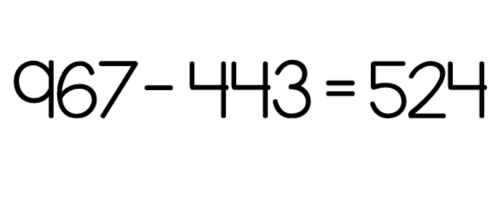
Here’s how to teach break apart 3-digit subtraction with a sample problem: 967 – 443
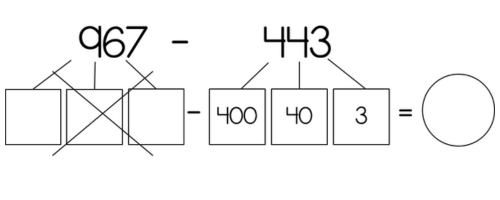
The most important thing to remember is that only the second number (443) gets broken apart.
Break it into:
400 (hundreds)
40 (tens)
3 (ones)
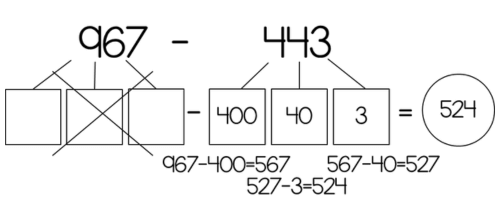
Have your students write these in boxes below the problem to keep everything organized.
I recommend setting this up for them at first and encouraging them to draw their own boxes later.
Watch for this mistake: Some students will write 4 instead of 400. This can cause confusion when subtracting, so correct it early.
Subtract in Steps
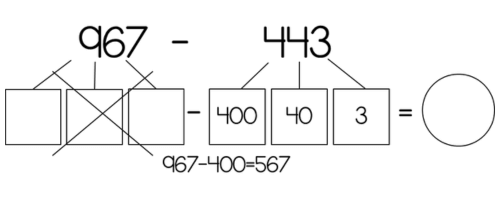
Now subtract each part of the broken-apart number from the original number (967), one place value at a time.
Subtract the hundreds: 967 – 400 = 567
Subtract the tens: 567 – 40 = 527
Subtract the ones: 527 – 3 = 524
Have students write each number sentence and write their final answer in the circle to show they’ve completed every step.
Note: This is also a good time to encourage neat, organized work – especially before moving on to regrouping problems where accuracy really matters.
Use Both Names for Clarity
This strategy goes by both “break apart” and “partial differences.”
I like to use both terms during instruction so students recognize either one on a test.
Sometimes the biggest barrier is simply recognizing the name – even when they know exactly how to solve the problem.
Try It in Your Classroom
Using the break apart strategy for subtraction helps students build a mental model of place value that supports more advanced strategies down the road – like regrouping and the traditional algorithm.
But like anything in math, students need repeated exposure to feel confident.
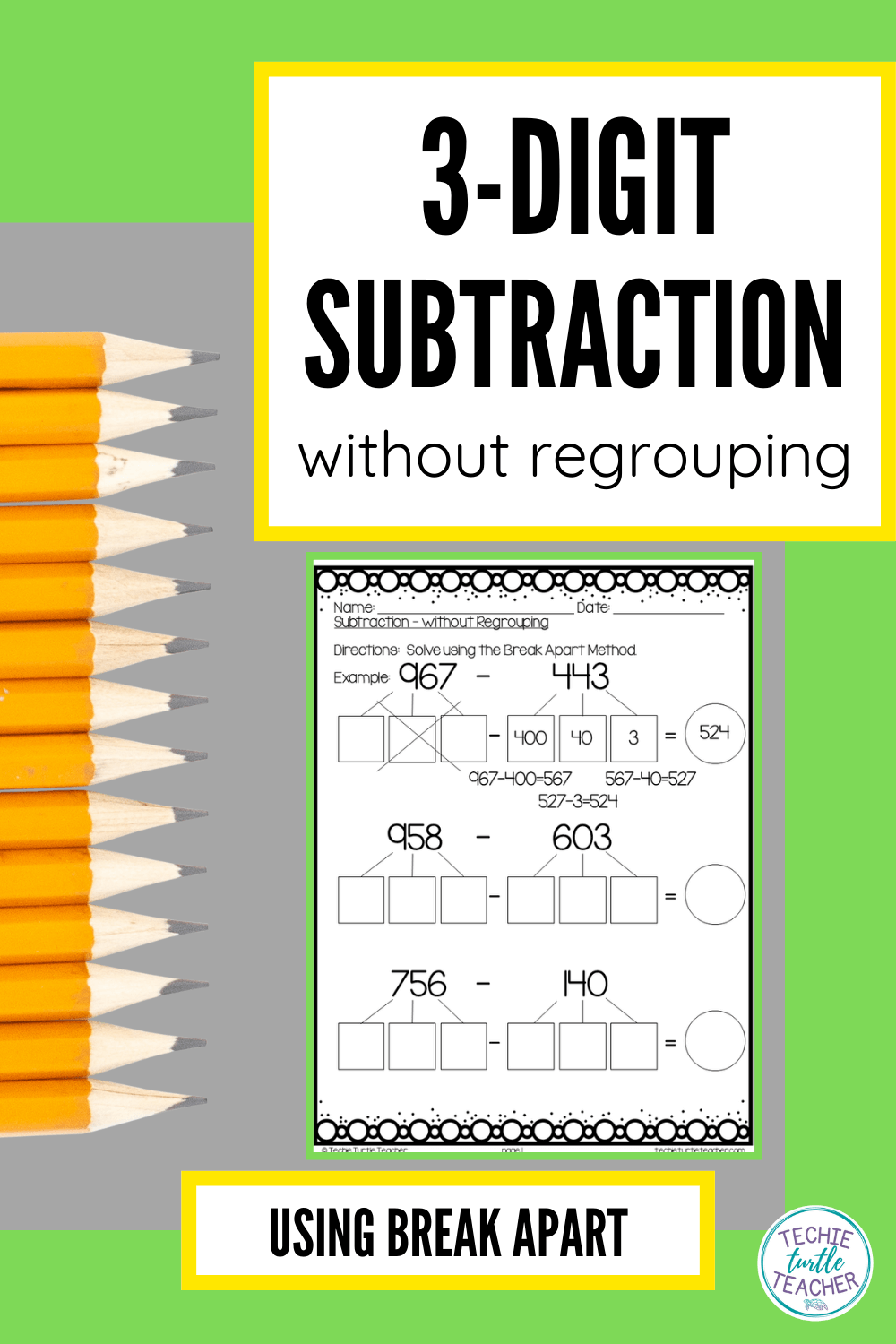
If you’re looking for ready-to-use practice focused specifically on break apart 3-digit subtraction, I’ve created a resource that walks students through:
Step-by-step number sentences
Visual boxes for organizing hundreds, tens, and ones
Space to write and circle their final answers
It’s structured to guide students while still building independence – and it works well for centers, small groups, or even early finishers.