3-Digit Addition without Regrouping Using Base Ten Blocks
This post may contain affiliate links and I will be compensated if you make a purchase after clicking on my links. I only recommend products that I use and love.
Table of Contents
3-Digit Addition without Regrouping Using Base Ten Blocks
3-digit addition without regrouping is an important pillar of teaching students how to add larger numbers.
It’s often the first step before moving into regrouping strategies, and for good reason – this foundational skill builds confidence and number sense.
When I taught 3-digit addition, I always started with this strategy.
It helped my students see patterns and understand place value before things got more complicated.
If you’re working on 2.NBT.7, this is a great place to begin.
There’s no need to rush through these lessons.
Students need time to master 3-digit addition without regrouping so they can truly understand the regrouping process later.
There are many ways to teach 3-digit addition, but base ten blocks are one of my favorite tools to start with.
They help students visualize the numbers and understand place value in a hands-on way.
Once students are comfortable with the manipulatives, you can move to drawings and even simple sketches with symbols.
This gradual release sets them up for success
with 3-digit addition without regrouping and prepares them for future strategies.
Teaching 3-Digit Addition without Regrouping with Base Ten Blocks
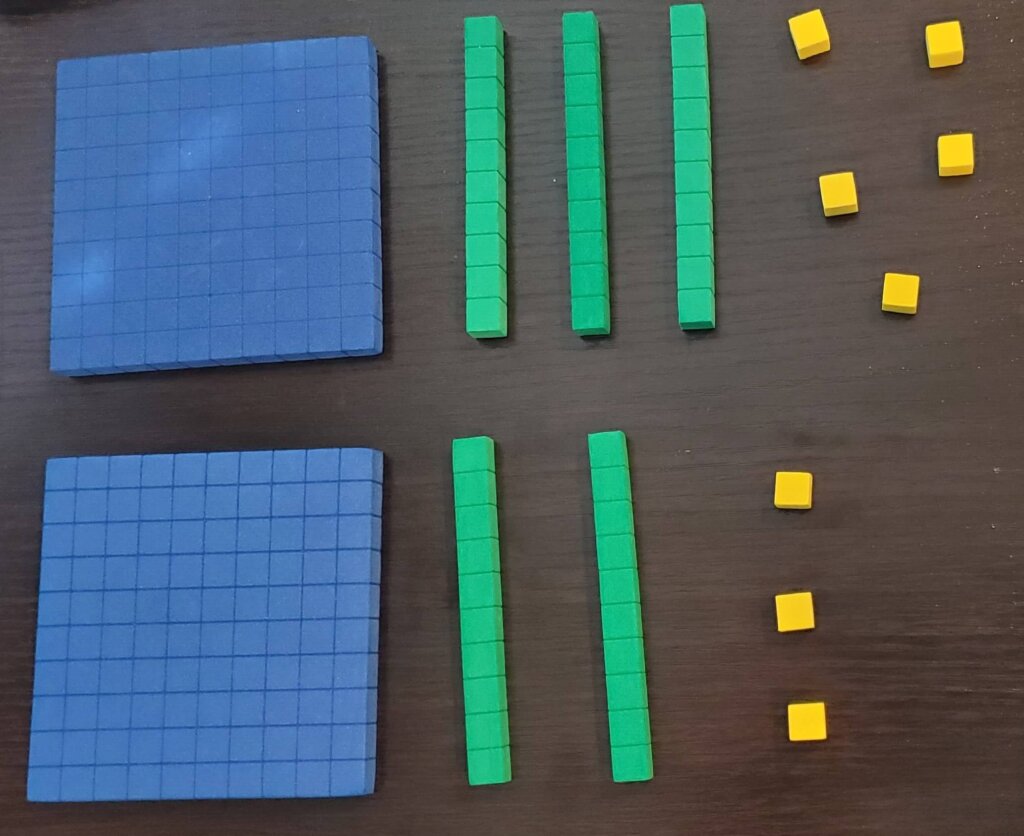
Start with physical base ten blocks so students can build and combine hundreds, tens, and ones.
Magnetic base ten blocks work great on the whiteboard – you can model a problem as the class solves it together, or have a student come up and explain their thinking.
Looking for an easy way to add this strategy into your small groups or math centers?
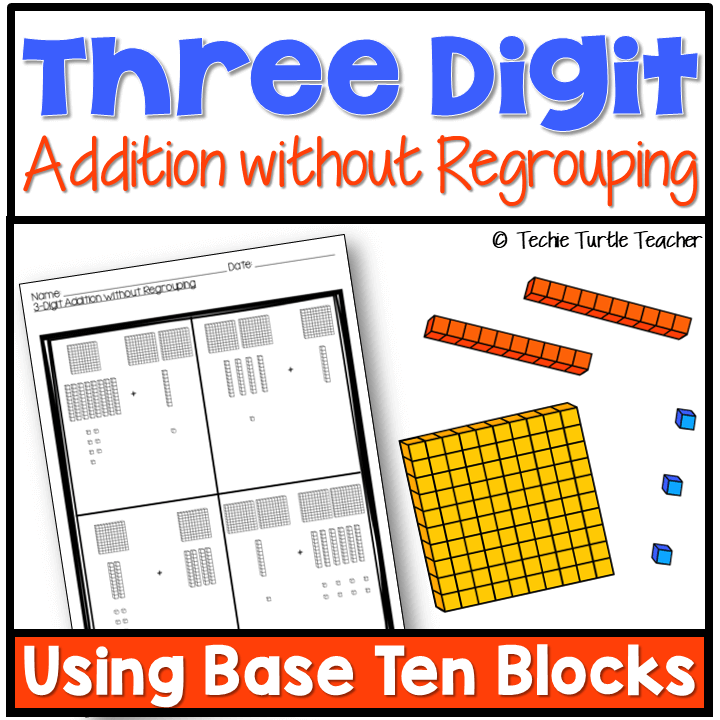
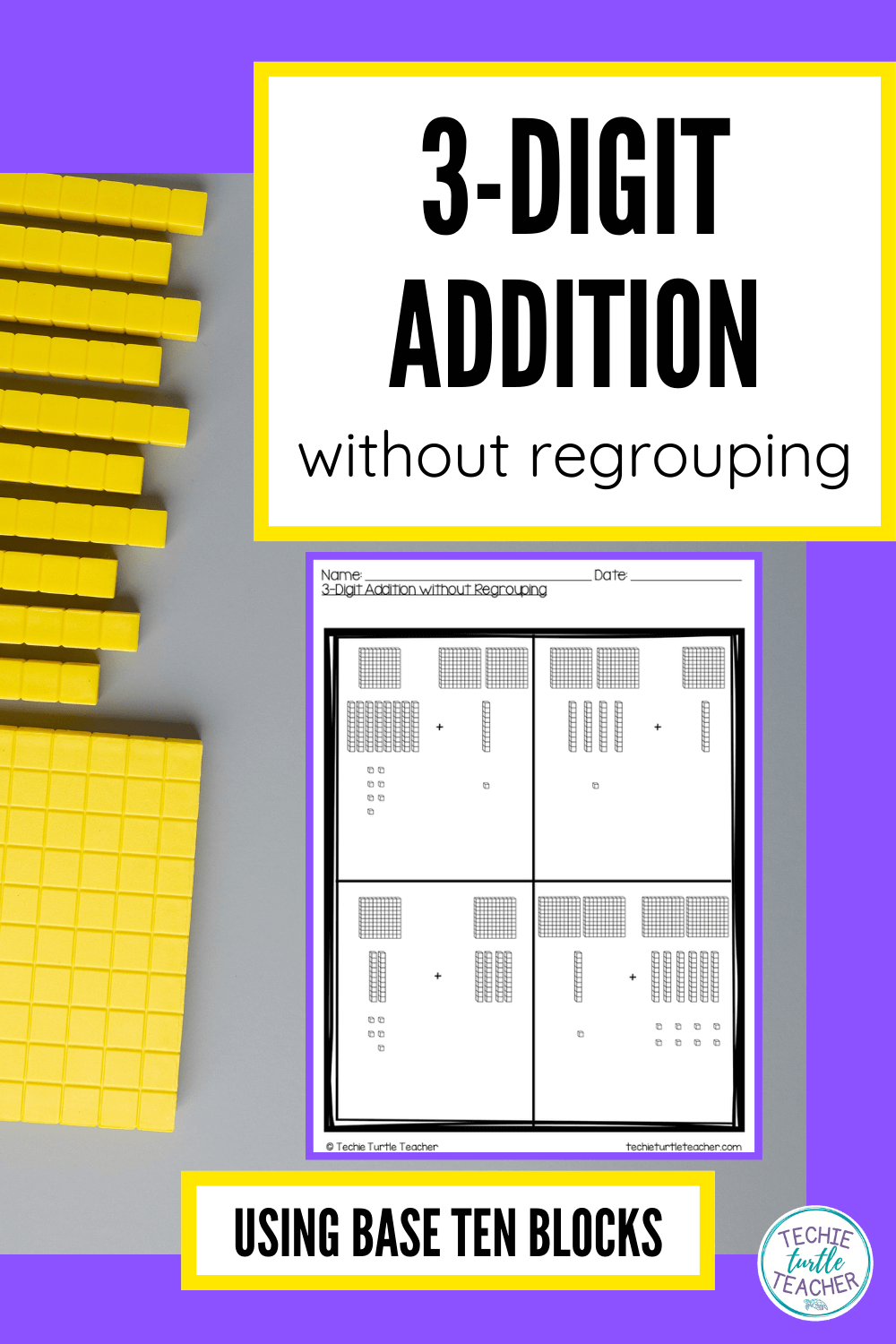
I created a ready-to-use resource that walks students through 3-digit addition without regrouping using base ten blocks.
3-Digit Addition without Regrouping Example
Ask students what they would do first.
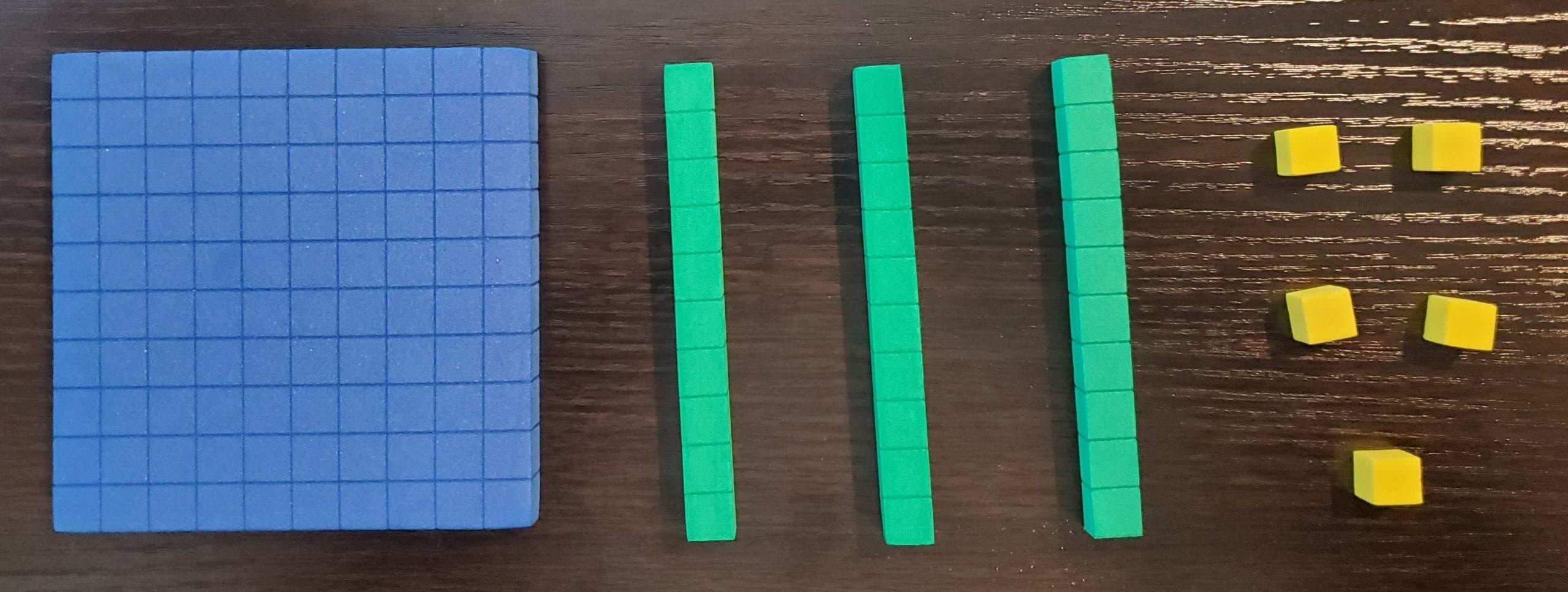
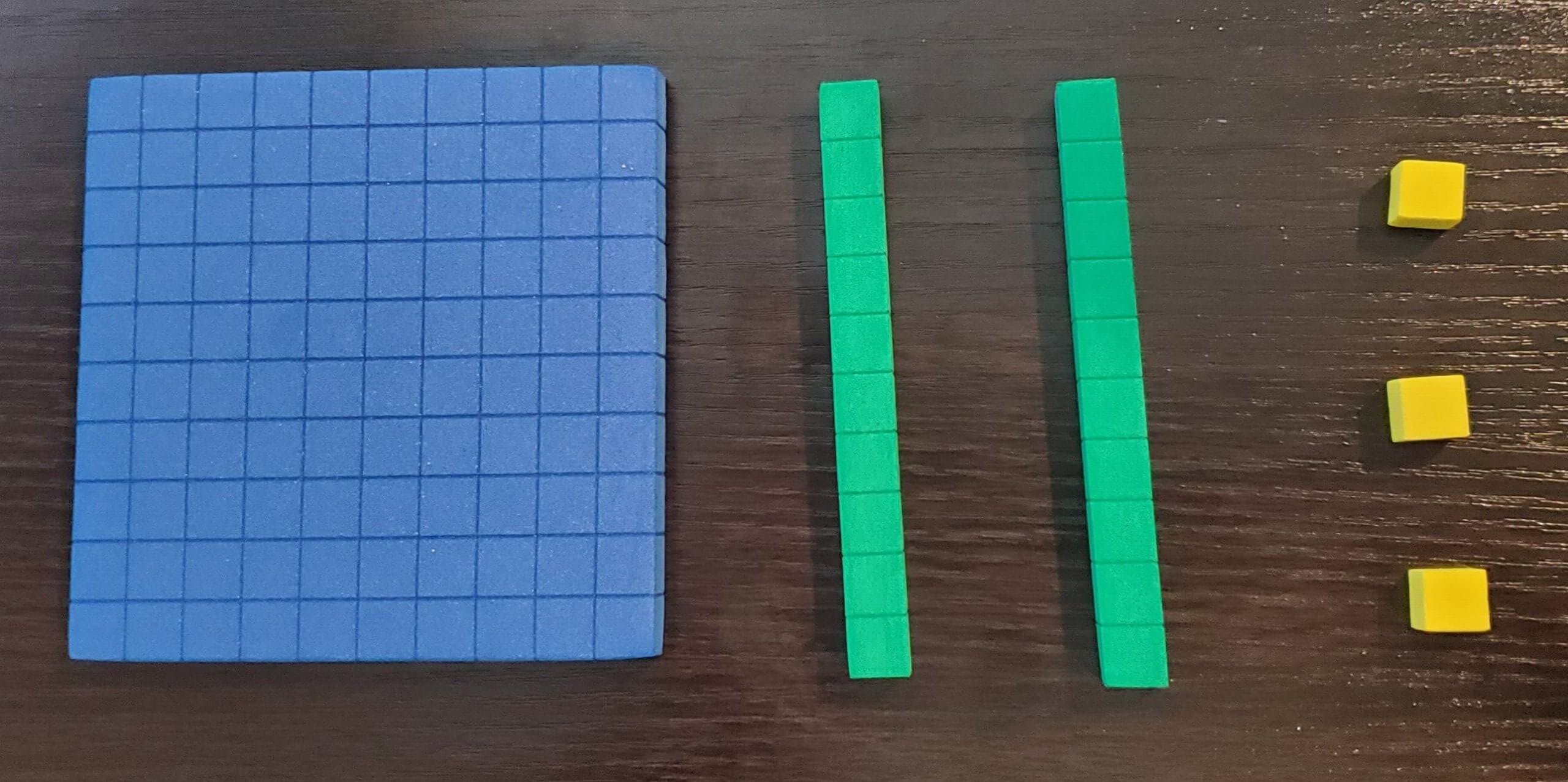
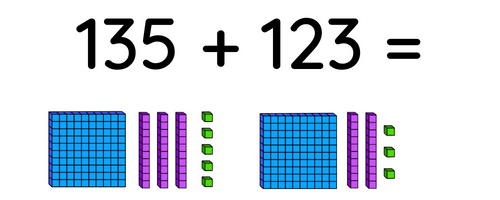
They should recognize the need to build both numbers with base ten blocks:
135
123
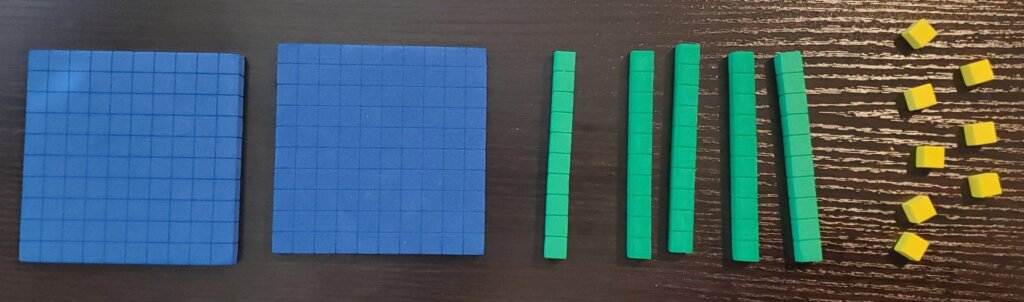
Once they build both numbers, they combine the hundreds, tens, and ones.
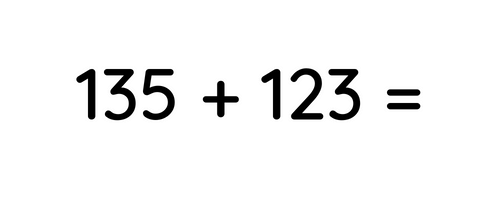
135 + 123
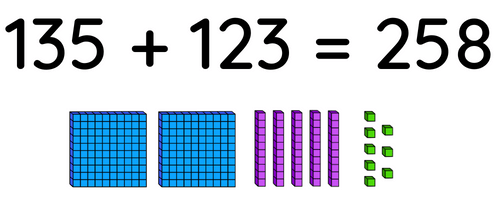
Add the values together:
2 hundreds, 5 tens, 8 ones
Final answer: 258
135 + 123 = 258
There’s no regrouping needed here, so it’s a simple way for students to get comfortable with 3-digit addition without regrouping in a concrete, visual way.
Moving to Paper: Drawing Base Ten Blocks
After students get plenty of hands-on practice, the next step is drawing base ten blocks on paper.
This is an important transition that helps them move from concrete to representational thinking.
Let’s use the same problem again:
Students draw two sets of base ten blocks, then count and combine the values:
2 hundreds, 5 tens, 8 ones → 258
Drawing base ten blocks gives students a way to show their thinking on paper while still using the same 3-digit addition without regrouping strategy.
Simplifying the Strategy: Squares, Sticks, and Dots
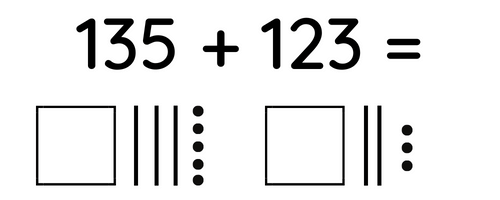
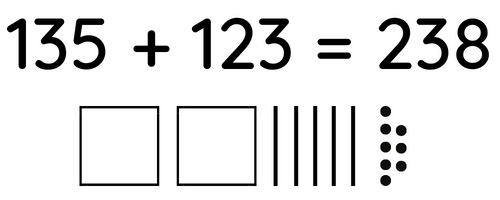
To help students show their work more quickly, you can teach them to draw squares for hundreds, sticks for tens, and dots for ones.
This becomes an efficient way for students to solve 3-digit addition problems without regrouping.
They draw the parts, count, and write the answer: 258
This is a flexible strategy for centers or independent work that reinforces 3-digit addition without regrouping while saving time and paper.
Build Student Confidence with Low-Prep Practice
Once students are comfortable using base ten blocks, drawings, or symbols, they’ll be ready for independent practice.
That’s when having reliable, low-prep materials becomes a huge help.
I created a resource specifically for this strategy that walks students through solving 3-digit addition without regrouping using base ten blocks, drawings, and symbols.
It’s perfect for centers, small groups, or even early finishers.
Whether you’re introducing the concept for the first time or reviewing it with students who need a refresher, this resource breaks it down step-by-step.
Grab the Full Set of Practice Pages
If you’re looking for ready-to-go 3-digit addition without regrouping practice, I’ve got you covered.
Click the image below to check out the full resource on TPT – it includes base ten block models, drawing practice, and student-friendly formats that make independent math time a little easier.
Want to try this strategy with your students before committing to the full resource?
Download the free sample worksheets and see how it works in your classroom.
Need help or have questions?
If you need help or have questions, the easiest way to reach me is to DM me on Instagram @techieturtleteacher.