2-Digit Subtraction with Regrouping Using Break Apart
This post may contain affiliate links and I will be compensated if you make a purchase after clicking on my links. I only recommend products that I use and love.
Table of Contents
Break apart subtraction with regrouping can be challenging for some students.
But once they get the hang of it, this strategy becomes a powerful tool for understanding place value and making sense of subtraction.
Students still benefit from visualizing tens and ones, but they no longer need the physical manipulatives.
The standard 2.NBT.5 gives students multiple strategies to solve two-digit addition and subtraction problems – and break apart subtraction with regrouping is one I take very slowly.
That way, students have time to understand why it works and build confidence along the way.
Let’s walk through exactly how this strategy works, along with some helpful tips you can use in your classroom right away.
What Is Break Apart Subtraction with Regrouping?
This method (also called partial differences) breaks apart numbers by place value so students can subtract in smaller, easier steps.
It works best when only the second number is broken apart.
This keeps the regrouping manageable and the thinking clear.
That’s what makes break apart supbtraction with regrouping so helpful for young learners – it gives them structure without overwhelming them.
Let’s look at an example.
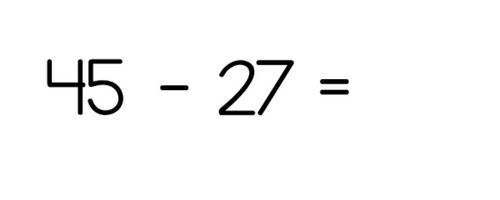
Example Using the Break Apart Strategy
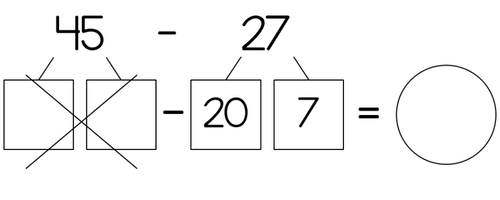
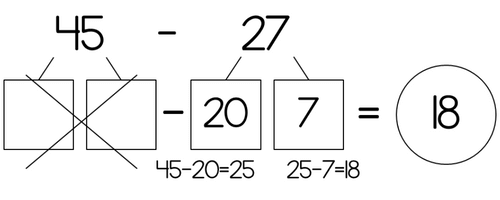
Step 1: Break apart the second number.
Keep the first number (45) as-is.
Break apart 27 into 20 and 7.
Use boxes or lines underneath the problem to help students organize their work visually.
Tip: Students often write “2” instead of “20.” Catch that early, since it will change the entire problem.
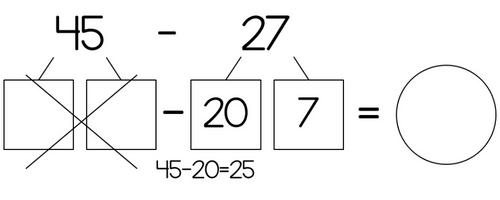
Step 2: Subtract the tens. Start with 45 and subtract the 20.
Have students write the number sentence under the box.
Even if they think they can do it in their head, encourage them to write each step – it helps them stay organized and avoid common regrouping mistakes.
Step 3: Subtract the ones. Now subtract the 7 from the answer above.
If needed, break apart the 7 to make it easier:
25 – 5 = 20
20 – 2 = 18
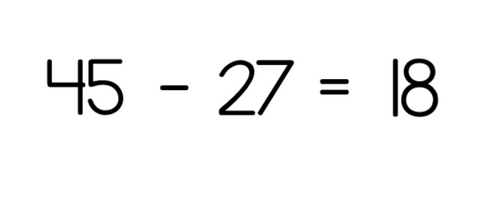
Remind students to write their final answer in the circle to show that they’ve finished all the steps.
This habit is especially useful when using break apart subtraction with regrouping because students are working through multiple steps.
Why It Works
This strategy is all about helping students see the math and make connections between numbers and place value.
You’re not just telling them to “borrow” – you’re showing them why regrouping matters.
And when subtraction problems get harder, break apart subtraction with regrouping gives them a method they can rely on.
When to Use This Strategy
This is a great fit when:
Students understand place value but still need structure
You’re transitioning from base ten blocks to more abstract thinking
You want students to write out their process clearly
You can use this method as part of a math workshop rotation, guided math small groups, or whole group instruction. I’ve used it in all three!
If your students need extra practice, I have a set of pages ready to go that make break apart subtraction with regrouping easy to model and practice – without needing to prep anything yourself.
Watch How to Teach this Strategy
Try It with Your Students
If you’re looking for an easy way to build confidence with subtraction and give your students plenty of guided practice, I’ve put together a low-prep resource that walks them through this exact strategy.
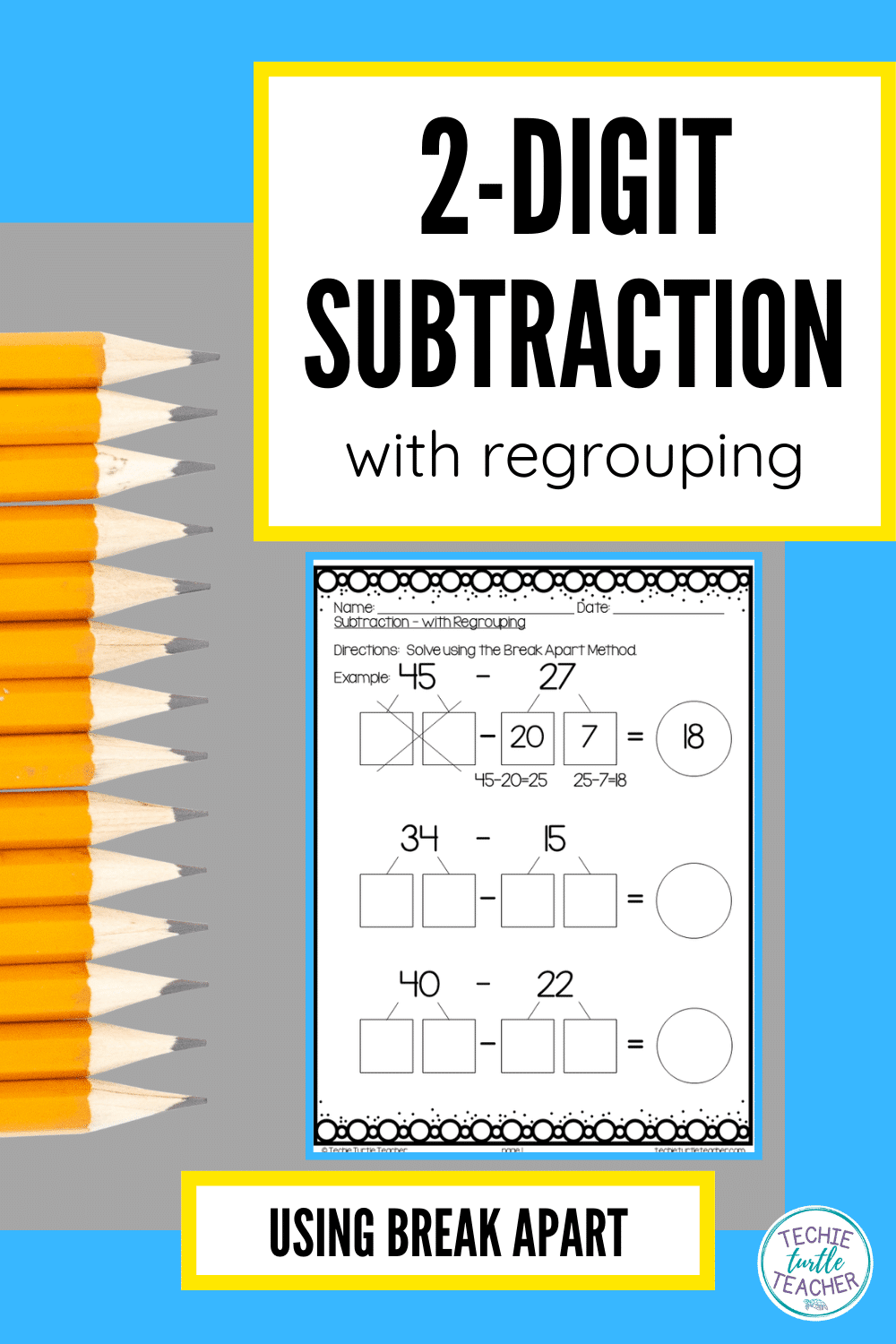
You’ll get scaffolded practice pages that match what I modeled above, with built-in space for drawing boxes, writing number sentences, and showing their thinking.
These pages focus specifically on break apart subtraction with regrouping for 2-digit numbers.
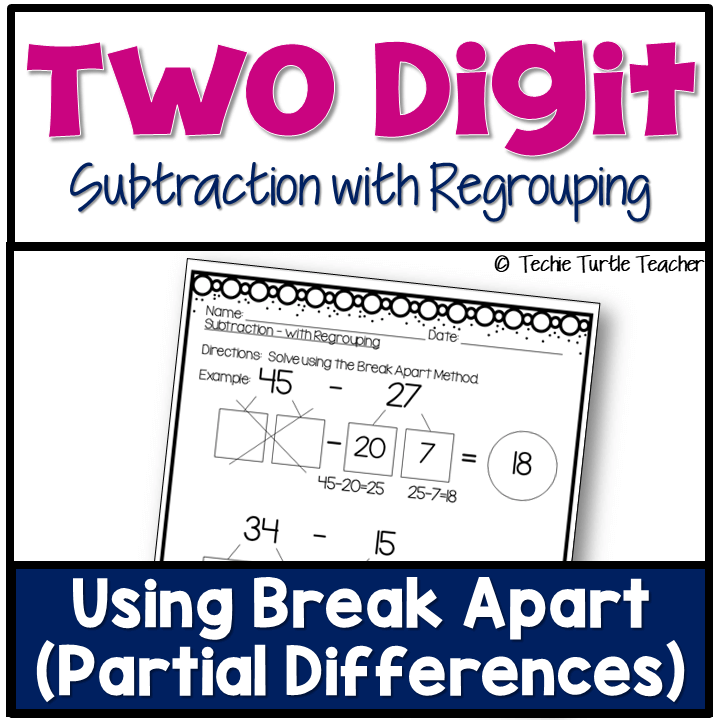
Click the image below to grab the full product on TPT – it’s ready to print and use tomorrow.
Want to try this strategy with your students before committing to the full resource?
Download the free sample worksheets and see how it works in your classroom.
Need help or have questions?
If you need help or have questions, the easiest way to reach me is to DM me on Instagram @techieturtleteacher.